The manufacturing sector is undergoing a profound paradigm shift, heavily anchored by the evolution of High Pressure Die Casting (HPDC) technologies. Global demands in the automotive, aerospace, industrial automation, and solid-state lighting (LED) sectors require structural components that demonstrate impeccable mechanical strength, minimal wall thicknesses, and high thermal conductivity.
HPDC operates under high injection velocities and enormous hydraulic force (often exceeding 1,000 tons of clamping pressure). It has become the gold standard for producing lightweight, dimensionally complex components. In today's market, industrial procurement leads are no longer just comparing casting quotes; they are evaluating supplier integration across design optimization, flow simulation analysis, thermal performance modeling, and supply chain resilience.
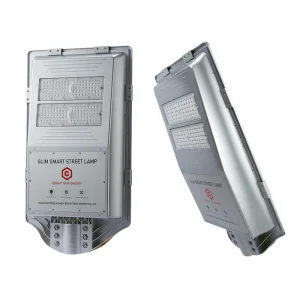
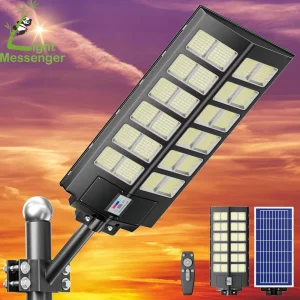
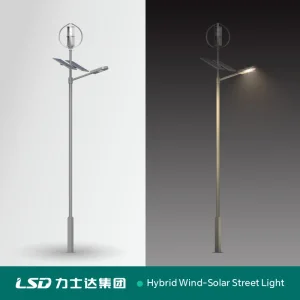
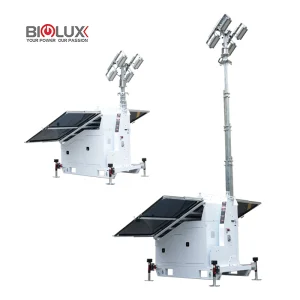
The commercial push toward electrification and sustainable smart cities has fueled structural demand for lightweight structural modules. Automotive OEMs are increasingly switching to gigacasting models, while outdoor municipal projects—such as remote-monitored solar streetlights—rely heavily on robust die-cast enclosures that resist mechanical stress and dynamic weather profiles.
To assist global procurement officers in identifying high-competency partners, the following list highlights the premier tier of global HPDC fabricators based on technical capability, automation scale, and market footprint.
Western buyers are increasingly looking for manufacturing partners that can provide reliable capacity and stable lead times. The solution lies in China’s Factory 4.0 infrastructure. This methodology shifts traditional fabrication into an automated, vertically integrated supply chain.
By conducting tool design, mold construction, melting, pressure-injection, thermal treatment, CNC machining, and surface finishes under one roof, suppliers mitigate logistics interfaces and speed up time-to-market.
Factory 4.0 integrates sensor arrays inside the die tools to monitor cavity pressure, gate velocity, and solidification temperatures, instantly flagging porosity risks or structural variations before demolding.
Modern factories leverage customized non-ferrous alloys like AlSi9Cu3 and ADC12. These materials optimize mechanical characteristics and heat dissipation for extreme climates, especially in off-grid solar deployments.
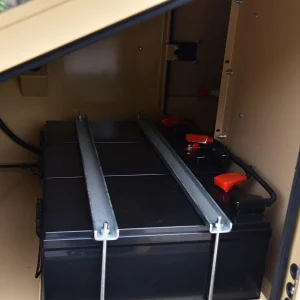
For instance, the inclusion of advanced CNC bending systems, automatic submerged arc welding, and electrostatic powder coating directly links raw aluminum casting to finished, corrosion-resistant outdoor lighting systems. When a manufacturer operates custom SMT patch lines and lithium battery pack production alongside their metalcasting plants, it eliminates multiple layers of Tier-2 markup and guarantees cross-component compatibility.
Choosing the right die casting alloy and structure depends entirely on the operating environment of the end product. Different industrial sectors place distinct demands on HPDC components:
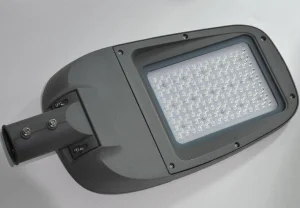
Primary Challenge: Thermal dissipation. High-wattage LED chips emit massive heat loads that can degrade lumen output over time.
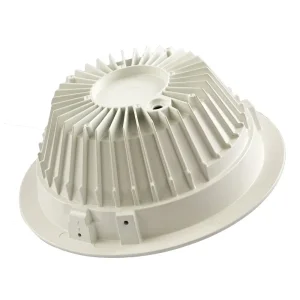
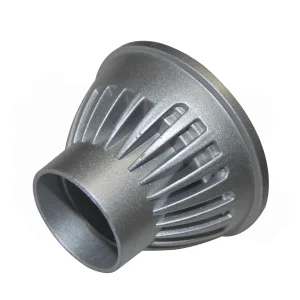
Solution: Thin-wall aluminum die casting (ADC12, A380) with engineered cooling fin structures. This design optimizes passive convection and maintains structural integrity against wind shear.
Primary Challenge: Environmental ingress and electromagnetic interference (EMI) protection for internal MPPT/IoT controllers.
Solution: Precision die-cast covers with gasket channels and anodized surface treatments. This structure shields electronic components from UV radiation and salt fog spray.
Primary Challenge: Extreme wind loads and mechanical fatigue on structural joints.
Solution: High-integrity structural aluminum and magnesium alloy components casting. These parts are subjected to ultrasonic crack detection to ensure zero inner-cavity porosity.
Established in 2003, Danyang Penelope Light Co., Ltd. has spent over two decades developing advanced lighting and industrial structural systems. The company represents the practical application of China's Factory 4.0 initiatives. It features an integrated production footprint designed to support municipal lighting projects, public infrastructure, and heavy-duty die-cast components.
The company’s manufacturing facility is built on automated manufacturing processes. Rather than outsourcing secondary machining or metal finishing, the factory utilizes large-scale, automated machinery to guarantee process consistency.
Crucial machinery resources include:
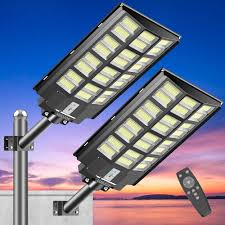
To support complex supply agreements, Danyang Penelope Light operates seven parallel production lines. This setup covers every stage from raw metal processing to final electronic integration:
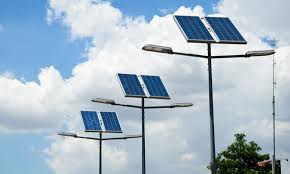
Danyang Penelope Light Co., Ltd. operates under strict regulatory compliance frameworks. The company holds first-class urban road lighting installation qualifications and second-class lighting design qualifications. It is recognized as a national high-tech enterprise and has maintained a continuous "AAA" credit rating.
The company's QA procedures are certified under the ISO9001:2000 Quality Management System and the ISO14001 Environmental Management System. Products carry national CCC and CQC markings, National Lamp Test Reports, and European CE safety certifications. This compliance framework ensures the company's components meet standard environmental and safety requirements for European, American, and Asian public projects.
To help engineering teams and purchasing managers make informed decisions, we have answered the most common questions regarding HPDC sourcing, mold maintenance, and component assembly:
A: For thermal management, ADC12 and A380 (AlSi9Cu3) are the most common selections. They offer a strong balance of castability, mechanical performance, and thermal conductivity (around 96-113 W/m·K). If maximum thermal performance is required and the geometry is simple, specialized silicon-free thermal alloys may be used, though they are more difficult to cast.
A: Modern plants utilize real-time thermal imaging, vacuum-assisted die casting, and computer-controlled gating speeds to prevent air entrapment. During production, real-time X-ray inspections and computerized tomographic scanning are used to verify internal structural density.
A: Mold lifespan depends heavily on steel choice (such as premium H13, Dievar, or QRO 90), operating temperatures, injection velocities, and regular thermal stress relief. Typically, a well-maintained tool steel mold can complete 100,000 to 150,000 shots of aluminum before requiring rebuilding.
A: Vertical integration consolidates die casting, welding, electronics assembly, battery packaging, and painting at a single manufacturer. This reduces logistical overhead, ensures component compatibility, and streamlines quality control under one ISO-certified management system.
 Penelope Light