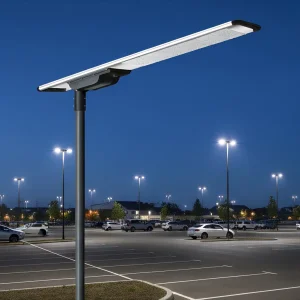
Explore our industrial-grade, certified luminaires engineered for extreme durability, smart power management, and grid integration.
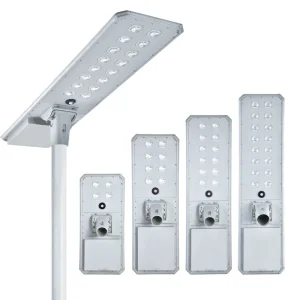
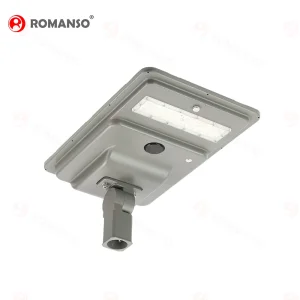
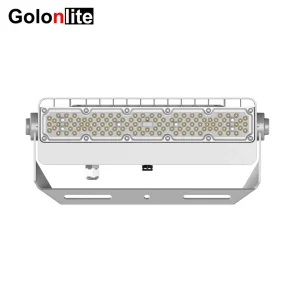
In the pursuit of zero-carbon infrastructure, municipal architects and civil engineers are moving away from traditional off-grid lighting models toward resilient, dual-source hybrid grid-tie systems.
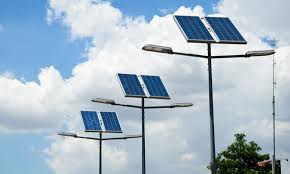
Unlike standard off-grid solar setups that rely exclusively on battery arrays—which are vulnerable to extended periods of overcast weather and premature capacity degradation—grid-tie solar street lights bridge the gap between renewable efficiency and utility stability. During high-insolation hours, integrated PV modules generate direct current, which is intelligently converted to supply the municipal load or back-fed into the public grid via net-metering protocols.
Conversely, during low-solar winter spells or peak night-time demands, the unit dynamically draws supplementary power from the grid. This eliminates the necessity for over-engineered, massive battery banks, drastically dropping initial capex and lowering long-term hazardous chemical footprint.
A twenty-year footprint of precision engineering, automated manufacturing, and global infrastructure lighting supplies.
Danyang Penelope Light Co., Ltd. is a leading high-tech lighting enterprise. Founded in 2003, our company has developed over 20 years into a modern, innovative manufacturer of high-quality lighting solutions with a strong reputation in both domestic and international markets.
Our factory is equipped with advanced large-scale automated equipment, including CNC bending machines, high-speed longitudinal shear machines, automatic submerged arc welding systems, gas welding stations, electrostatic powder coating facilities, specialized fluorocarbon paint spraying rooms, and precision laser cutting machines. This comprehensive infrastructure enables us to maintain high efficiency, consistent quality, and rapid production cycles.
We operate seven dedicated production lines, covering all aspects of lighting manufacturing to achieve deep vertical integration and end-to-end quality assurance:
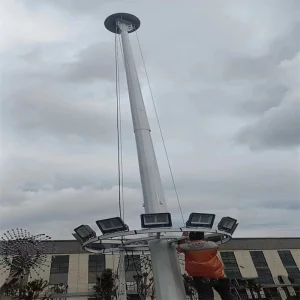
Features 1,500-ton automated bending machinery and heavy-duty submerged arc welding, supporting single-tapered and multi-sided structural poles up to 35 meters.
Engineered for high-efficacy optical designs, maximizing lumen-per-watt ratios, thermal dissipation management, and mechanical durability.
Equipped with high-speed surface mount technology (SMT) and automated optical inspection systems to guarantee zero defects on LED driver circuits and controls.
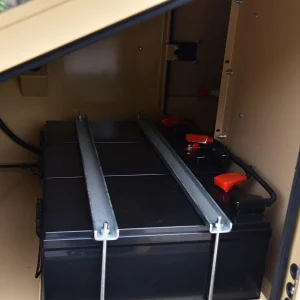
Dedicated processing and assembly of safety-optimized LiFePO4 chemistry packs, calibrated for temperature resilience and deep cyclic lifespan.
High-efficiency monocrystalline and polycrystalline photovoltaic panel lamination and testing, designed for extreme weather survivability.
High-precision laser CNC stations to execute custom landscape, bracket, and architectural cuts with high repeatability and zero distortion.
In addition to the core competencies above, our 7th line is specialized in Lighting Wall Washing Lamp Production, which caters to decorative urban architecture, building envelopes, and targeted landscape illumination.
Building high-performing municipal lighting goes beyond assembling off-the-shelf parts. Operating out of Danyang, China's core manufacturing hub, our infrastructure brings unmatched scale and quality advantages to major developers:
Our quality management matches the most stringent global mandates. We maintain active ISO9001:2000 Quality Management and ISO14001 Environmental Management system certifications. Our structural and optical units hold national CCC, CQC, National Lamp Test Reports, and European Union CE safety certifications, guaranteeing code compliance in highly regulated markets.
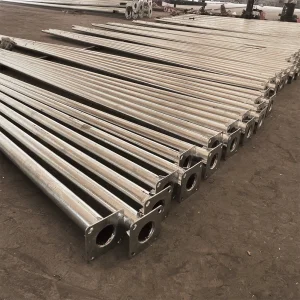
For municipal roadways and maritime coasts, structural failures are unacceptable. Our structural shafts are engineered using premium Q235/Q345 structural steel, undergoing double-sided hot-dip galvanization matching ISO 1461. This ensures a protective zinc coating thickness of >86μm, preventing oxidization, rust, and chemical stress cracking for over 25 years.
We provide full project engineering support, utilizing advanced Dialux simulations. This ensures target illuminance (Lux) and uniformity standards are met, minimizing pole count and layout costs while maximizing safety and energy efficiency.
Implementing reliable, tailored illumination frameworks across varying environments and geographic realities.
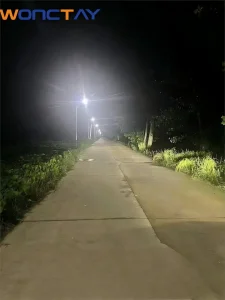
High-speed corridors demand high lumen outputs and uniform distribution. By combining grid-tied reliability with energy-efficient LED modules, municipalities can guarantee consistent, glare-free light levels while reducing the draw on local electrical infrastructure.
Large-scale distribution facilities operate 24/7, requiring reliable lighting across loading zones, staging yards, and access perimeter fences. Our smart hybrid lighting keeps operations running safely without adding heavy loads to industrial micro-grids.
Our structures integrate seamlessly with smart city frameworks. Standard features like 4G, LTE, and Zigbee remote interfaces allow operators to dynamically adjust lighting outputs, monitor unit health, and track real-time power metrics from a single central portal.
As smart grid technologies mature, public lighting installations are evolving from simple fixtures into responsive energy nodes. Here is where the industry is heading:
1. Bi-Directional Net-Metering Integration: Modern grid-tied solar lights are increasingly designed with integrated micro-inverters. Instead of storing excess energy in local batteries, these units feed power directly back into the municipal grid during daylight hours, turning street lighting networks into distributed power stations.
2. Smart Adaptive Dimming: Integrating intelligent motion sensors, vehicular flow trackers, and atmospheric clarity monitors allows systems to adjust light output dynamically. Operating at lower illumination levels during low-traffic hours helps extend component lifespans and reduce overall energy consumption.
3. Advanced LiFePO4 Thermal Control: Next-generation solar configurations use Lithium Iron Phosphate (LiFePO4) chemistry with advanced thermal management systems. This prevents thermal runaway, ensuring stable operation even in extreme desert heat or freezing sub-zero environments.
How we streamline international sourcing, optimize freight budgets, and guarantee on-site performance.
Managing large-scale lighting imports requires balancing compliance, engineering integrity, and shipping logistics. At Danyang Penelope Light, we minimize supply chain risks through comprehensive engineering support, detailed logistics management, and clear technical documentation:
Every lighting pole is engineered for project-specific wind environments. Using advanced structural analysis, we design shafts, baseplates, and anchor bolts to withstand regional wind velocities, including typhoon-prone areas (up to 45m/s).
We provide comprehensive DIALux design layouts prior to shipping. Our engineers calculate optimal mounting heights, pole spacing, and lens distributions to meet local lighting standards (IESNA/EN13201) and prevent light pollution.
Our components undergo hot-dip galvanizing and electrostatic powder coating, meeting ASTM A123 standards. This dual-layer coating provides excellent resistance to corrosion, UV exposure, salt spray, and physical impact.
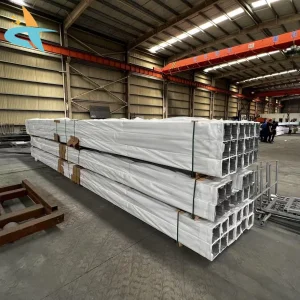
To reduce shipping costs and protect finishes, poles are bundled in protective wrap while fixtures and electronics are packed in heavy-duty cardboard boxes. This ensures safe delivery and efficient container unloading.
Critical answers for B2B buyers, municipal engineers, and energy consultants.
Depending on the project configuration, grid-tie solar street lights can be specified with a hybrid battery backup or a direct grid-feed design. Under standard configuration, if the grid fails, the unit continues to operate independently using its local LiFePO4 battery pack. However, direct grid-tie systems without battery storage will shut down as a safety measure (anti-islanding protection) to prevent feeding electricity back into damaged utility lines during maintenance.
Pure off-grid systems require large battery banks to guarantee light during consecutive cloudy or rainy days, which increases both initial equipment costs and long-term recycling expenses. Grid-tie systems draw power from the utility grid during extended periods of low solar energy, ensuring reliable illumination while keeping battery size minimal and cost-effective.
Our steel poles undergo hot-dip galvanization, creating a thick, multi-layered zinc coating (>86μm) that acts as a physical barrier and sacrificial anode. For coastal installations, we apply a secondary electrostatic powder coating or fluorocarbon paint finish to prevent corrosion from airborne salt spray and moisture.
We offer comprehensive warranties tailored to project specifications. Our standard high-performance solar street lights come with a 5-year warranty. Solar panels are rated for a 25-year performance lifespan, our LiFePO4 battery packs are designed to last 5,000+ charge cycles, and LED driver modules are backed by a 5-year warranty to ensure long-term, trouble-free operation.
Yes, our systems are designed for smart city compatibility. They can be equipped with universal NEMA receptacles and controllers supporting Zigbee, LoRaWAN, 4G, or NB-IoT protocols. This allows operators to integrate fixtures directly into central SCADA or municipal management software for remote monitoring, diagnostic reporting, and scheduling.
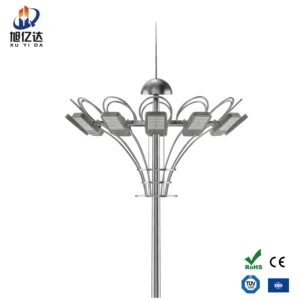
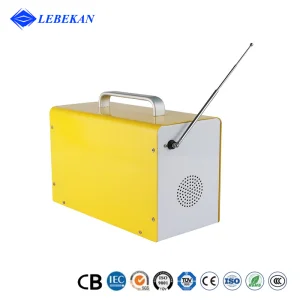
Complete your project requirements with our specialized high-mast columns, mobile trailers, and smart controllers.
 Penelope Light