Engineering-led OEM and ODM manufacturing for wireless solar energy systems, smart street lighting, high-mast infrastructure, solar storage, and integrated outdoor power platforms—built for enterprise procurement, public projects, and global deployment.
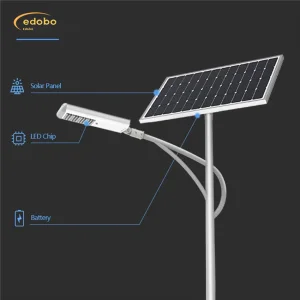
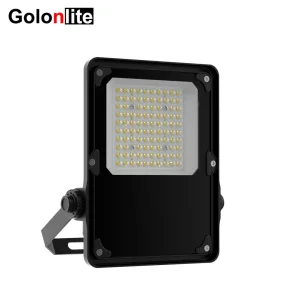
Explore OEM Product PlatformProcurement teams often begin with a single product requirement, then expand into a system-level program covering power generation, storage, control, monitoring, poles, optics, and communications. The eight products below show the practical building blocks behind custom wireless solar energy systems for roads, campuses, public spaces, and industrial infrastructure.
For enterprise buyers, E-E-A-T starts with verifiable manufacturing evidence: production equipment, process control, certification history, installation qualifications, and documented export experience. The company profile below is retained in full and provides the authority foundation for OEM wireless solar energy system sourcing.
Danyang Penelope Light Co., Ltd. is a leading high-tech lighting enterprise. Founded in 2003, our company has developed over 20 years into a modern, innovative manufacturer of high-quality lighting solutions with a strong reputation in both domestic and international markets.
Our factory is equipped with advanced large-scale automated equipment, including CNC bending machines, high-speed longitudinal shear machines, automatic submerged arc welding systems, gas welding stations, electrostatic powder coating facilities, specialized fluorocarbon paint spraying rooms, and precision laser cutting machines. This comprehensive infrastructure enables us to maintain high efficiency, consistent quality, and rapid production cycles.
We operate seven dedicated production lines, covering all aspects of lighting manufacturing:
Danyang Penelope Light Co., Ltd. is recognized as a national high-tech enterprise with first-class urban road lighting installation qualifications and second-class lighting design qualifications. The company has been honored as a “Contract-Abiding and Trustworthy Enterprise” and maintains a continuous “AAA” credit rating. We have successfully passed ISO9001:2000 quality management system and ISO14001 environmental management system certifications, as well as national CCC and CQC product certifications, National Lamp Test Reports, and EU CE safety certifications, reflecting our commitment to excellence and international standards.
We firmly adhere to the principles of sustainable development, guided by innovative design, centered on high-quality products, and grounded in reliable craftsmanship. Our professional R&D team focuses on avant-garde product development, ensuring our design, innovation, and manufacturing capabilities are consistently at the forefront of the global lighting industry. With continuous investment in new technology, we are able to provide intelligent, energy-efficient, and environmentally friendly lighting solutions that meet the evolving demands of urban infrastructure and modern architectural projects.
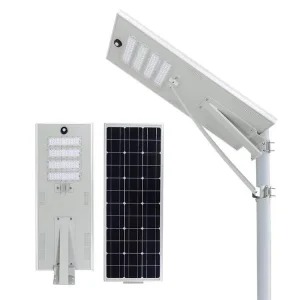
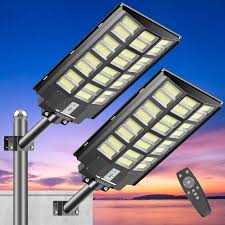
Our diverse product range includes solar street lights, LED street lights, high-mast lights, lighting poles, and complete solar power systems. With a commitment to excellence, reliability, and innovation, our products are exported to numerous countries worldwide, supporting urban and rural lighting projects, commercial and public spaces, landscapes, and infrastructure projects.
At Danyang Penelope Light Co., Ltd., we strive to illuminate the world with sustainable, high-quality, and technologically advanced lighting solutions, contributing to smarter, greener, and safer cities for the future.
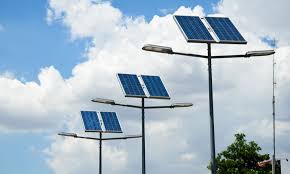
This manufacturing depth is directly relevant to wireless solar energy systems because every subsystem must work together under real weather, electrical, and maintenance conditions. A pole is not only a structure; it is a platform for PV modules, batteries, controllers, drivers, sensors, antennas, and service access. An OEM partner must therefore coordinate mechanical design, thermal management, waterproofing, electrical protection, firmware configuration, packaging, and documentation before a system can be considered procurement-ready.
Global procurement demand has shifted from simple fixture purchasing to integrated, outcome-based sourcing. Utilities, EPCs, municipalities, transport authorities, industrial developers, and facility management groups now ask for systems that combine solar generation, storage, controls, wireless connectivity, and verifiable compliance in a single OEM package. The strongest tenders do not ask only for wattage; they ask for measured resilience, lifecycle cost, installation speed, serviceability, data visibility, and documented quality.
Buyers evaluate wireless solar systems against grid extension, diesel generation, and conventional street lighting. The winning value case combines high-efficiency PV, long-life lithium storage, MPPT charging, low-maintenance LED optics, and remote diagnostics. TCO modelling should include installation labor, civil works, battery replacement cycles, connectivity costs, and spare-parts strategy—not only the initial unit price.
Highways, ports, industrial parks, and rural public spaces often lack reliable power. A modular wireless solar system can be staged, shipped, and commissioned without trenching or distribution upgrades. Factory pre-configuration, plug-and-play connectors, and documented commissioning checklists reduce site labor and shorten project timelines.
Uninterrupted lighting and power support safety, security, and operational continuity. Wireless monitoring allows operators to detect battery depletion, controller faults, PV underperformance, and luminaire failures before they become service incidents. This is especially important in critical corridors, logistics areas, and public spaces with limited maintenance windows.
Corporate and public buyers need credible environmental outcomes. OEM documentation should support energy-yield estimates, avoided diesel consumption, recyclable material choices, and product lifetime assumptions. Reliable measurement and reporting help procurement teams satisfy internal ESG targets without overstating impact.
Modern wireless solar platforms may integrate motion sensing, CCTV, environmental sensors, display modules, and power monitoring. Open interfaces and clear data ownership rules are essential. Manufacturers should document protocols, gateways, APIs, cybersecurity boundaries, and fallback operation when connectivity is unavailable.
Telematics and fault alarms reduce truck rolls and improve service-level performance. A practical platform tracks input voltage, battery state of charge, charge and discharge current, lamp status, tilt or tamper alerts, and communication health. Predictive maintenance becomes valuable when data is tied to a clear escalation workflow and spare-parts plan.
International projects face different electrical, safety, labeling, and installation requirements. Procurement teams should confirm certification status for the exact configuration ordered, not only for a generic product family. CE, RoHS, CCC, CQC, ISO 9001, and ISO 14001 claims must be supported by valid documents and traceable test reports.
Distributors and EPCs often require private labeling, packaging customization, voltage variants, optical distributions, pole interfaces, and country-specific documentation. A strong manufacturing partner protects core quality while allowing controlled customization across optics, drivers, batteries, controllers, brackets, and connectivity modules.
Years of lighting engineering and manufacturing experience since 2003
Dedicated production lines covering poles, LEDs, SMT, solar batteries, panels, cutting, and wall washing
Automatic bending capability for robust lamp pole and high-mast infrastructure
Product directions represented across solar, LED, high-mast, spotlight, and power-system categories
These figures reflect the manufacturing capabilities described in the company profile and are presented to help procurement teams frame supplier due diligence. Project-specific capacity, certification scope, and configuration must always be confirmed in the quotation and technical agreement.
Wireless solar energy systems are not a single product category. They are an architecture: solar generation, storage, power conversion, LED lighting, sensors, communications, and mechanical infrastructure combined around a project’s operating model. This is why a manufacturer with in-house pole production, LED assembly, solar battery lines, and SMT capability can reduce integration risk for enterprise buyers.
Road authorities need consistent illuminance, glare control, and reliable operation across long corridors. Wireless solar systems can support off-grid sections, temporary works, and areas where trenching is costly. Key specifications include wind load, pole height, battery thermal design, anti-theft hardware, dimming profiles, and remote fault reporting.
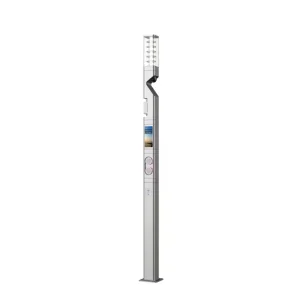
Smart poles may combine lighting, CCTV, environmental sensing, public displays, emergency call points, and communications. A wireless solar smart pole requires careful power budgeting and fallback logic so that critical functions remain available during low-irradiance periods. Documentation should define data ownership, cybersecurity roles, and maintenance responsibility.
Industrial facilities often need perimeter lighting, yard lighting, gate illumination, and remote power for sensors. Solar wireless systems reduce cabling in phased expansions and temporary yards. Procurement should verify IP ratings, corrosion protection, surge protection, and the service plan for batteries in high-temperature or dusty environments.
Developers and facility managers value clean installation, predictable operating cost, and visual consistency. Custom optics, CCT selection, housing finishes, and branding can be aligned with architectural requirements. Wireless monitoring supports service-level reporting and helps property teams manage distributed assets without frequent site visits.
Remote areas may lack stable grid power but still require safe road lighting, public area lighting, and small power services. Modular solar systems can be delivered as kits with clear installation instructions, local-language labels, and spare-part schedules. Practical designs prioritize theft resistance,simple maintenance, and long service intervals.
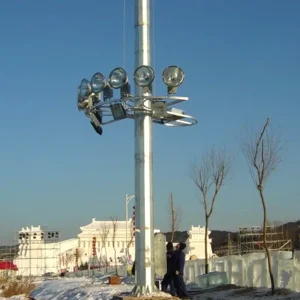
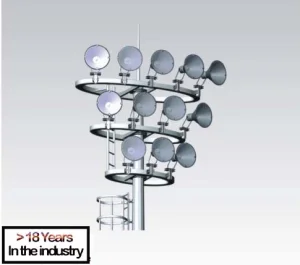
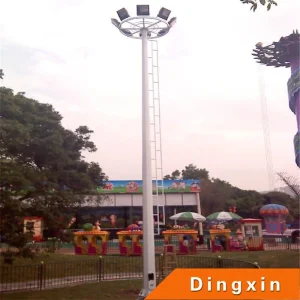
Large-area lighting requires structural integrity, lifting systems, corrosion resistance, and coordinated electrical protection. High-mast poles and lifting systems must be engineered for local wind and seismic conditions. Solar and wireless monitoring can supplement conventional power for auxiliary loads, security lighting, and remote diagnostics.
A credible technology roadmap separates proven engineering from future-facing experimentation. For wireless solar energy systems, the near-term priorities are efficiency, safety, serviceability, and data quality. The longer-term opportunity is to make distributed solar infrastructure easier to finance, operate, and integrate with broader energy and smart-city platforms.
Improved PV cell efficiency, optimized module angles, and LiFePO4 battery architectures can increase usable energy while improving cycle life and thermal safety. Battery management systems should provide cell balancing, overcharge protection, low-temperature protection, and clear fault codes for maintenance teams.
MPPT charge controllers extract more energy under changing irradiance and temperature. Intelligent energy management adds adaptive dimming, reserve-capacity settings, holiday profiles, and load prioritization. The objective is not only brightness; it is predictable autonomy during cloudy periods and critical operating windows.
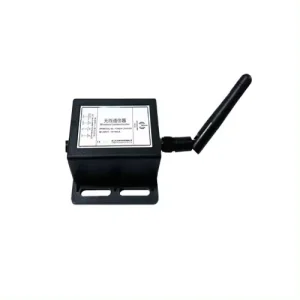
NB-IoT, LoRa, 4G, and local mesh options allow operators to monitor distributed assets without trenching communications cable. A well-designed platform reports PV input, battery state, load status, door or tamper events, and communication health. Local fallback control should keep lighting operational if the network is unavailable.
Hybrid generation can improve resilience in locations with complementary wind and solar resources. Future-ready systems should define grid-interaction boundaries, inverter requirements, load priorities, and safety isolation. For many projects, a staged approach is more practical than treating every pole as an independent microgrid.
AI-assisted analytics can identify abnormal battery behavior, PV underperformance, and service patterns across large asset fleets. Digital twins can help engineers test pole loading, energy yield, and maintenance scenarios before deployment. The key is data quality and clear accountability, not technology for its own sake.
Modular drivers, controllers, batteries, and sensor bays make service faster and reduce whole-product replacement. Design for recyclability, repairability, and long-term spare-parts availability supports ESG goals and lowers lifecycle cost. Documentation should state expected service intervals and end-of-life handling guidance.
Future outlook: the next competitive advantage in wireless solar infrastructure will come from validated system integration, not isolated component specifications. Buyers will reward manufacturers that can prove energy performance, cybersecurity discipline, local compliance, and long-term service readiness across multiple markets.
Commercial and industrial adoption is being shaped by four reinforcing forces: infrastructure expansion, decarbonization policy, rising grid constraints, and digital operations. The result is a more sophisticated buyer who expects documented performance and a clear localization plan, not a generic export catalogue.
New roads, industrial parks, ports, campuses, and public spaces require lighting and power infrastructure that can be deployed in phases. Wireless solar systems reduce dependency on trenching schedules and grid connection timelines.
Public buyers increasingly require energy performance, safety documentation, and lifecycle cost transparency. Tenders may demand test reports, warranty terms, local standards, and clear spare-parts commitments.
Where grid extension is expensive or unreliable, solar-plus-storage can be economically attractive. The strongest business cases combine avoided civil works, reduced diesel use, and lower maintenance trips.
Operators want asset visibility across dispersed sites. Wireless monitoring, fault alerts, and service dashboards are becoming expected features rather than premium add-ons for larger projects.
For manufacturers, this global status creates a dual requirement: keep core platforms stable enough for volume production, yet flexible enough for local voltage, climate, procurement, and documentation differences. A successful OEM program therefore combines standardized quality gates with configurable system layers.
Localization is a systems discipline, not a translation task. It covers standards mapping, electrical configuration, label and manual control, packaging, logistics, commissioning support, and after-sales governance. For wireless solar energy systems, compliance must be confirmed at the exact configuration level because battery, controller, driver, antenna, and luminaire choices can change the applicable evidence package.
Before quotation, define destination-market requirements for safety, EMC, ingress protection, photometric performance, battery transport, and hazardous materials. Certification files should match the model, voltage, plug, and control architecture being supplied.
Buyers should receive test reports, inspection records, material declarations, and batch traceability where applicable. The company’s stated ISO9001:2000 quality management system, ISO14001 environmental management system, CCC, CQC, National Lamp Test Reports, and EU CE safety certifications provide a useful foundation for due diligence.
Voltage, frequency, plug type, cable gland, surge protection, pole interface, wind-load requirement, and anti-theft design must be specified. Controlled customization prevents a standard product from being over-adapted without revalidation.
Local-language manuals, warning labels, QR-linked service instructions, commissioning forms, and maintenance schedules improve installation quality. Training material should explain battery handling, controller setup, wireless gateway pairing, and fault escalation.
Solar modules, batteries, poles, and luminaires may require different packaging and transport rules. A project staging plan reduces site congestion, protects sensitive components, and aligns deliveries with civil works and commissioning milestones.
Clear warranty boundaries, spare-parts lists, response times, and remote-support procedures reduce project risk. For wireless systems, after-sales governance should also define data access, firmware update responsibility, and cybersecurity escalation contacts.
Compliance assurance is strongest when it is built into the product lifecycle: design review, incoming material control, process inspection, final testing, packaging verification, and post-delivery feedback. This approach supports E-E-A-T because it turns claims into documented, repeatable evidence that procurement teams can audit.
These questions reflect common enterprise sourcing concerns. Final answers should always be confirmed against the project specification, destination market, and agreed technical documentation.
It typically means a solar-powered lighting or power platform that uses wireless communication for monitoring and control rather than trenching data cable. Power generation, battery storage, controller, LED driver, luminaire, antenna, and sensors are integrated or coordinated as a system. The wireless layer may use NB-IoT, LoRa, 4G, or local mesh depending on site coverage and operator requirements.
Customization can cover voltage, frequency, plug type, protection class, optics, CCT, pole interface, battery capacity, controller settings, labels, and documentation. However, any change that affects safety, EMC, or performance should be reviewed against the target market’s requirements. Procurement should request a configuration-specific compliance matrix before approval.
Support usually begins with standards mapping and document review, followed by sample configuration confirmation and test planning where required. The company’s stated ISO9001:2000, ISO14001, CCC, CQC, National Lamp Test Reports, and EU CE safety certifications provide a baseline, but the exact product configuration and destination market determine what evidence is needed.
Lead time and MOQ depend on product family, customization level, battery transport requirements, pole production schedules, and project staging. A practical RFQ should include quantity, destination, voltage, lumen target, autonomy requirement, pole height, wind load, communication protocol, packaging needs, and required certification documents. This allows a more accurate production and delivery plan.
Quality control should include incoming material inspection, process checks, electrical safety testing, ingress protection verification where applicable, photometric checks, battery and controller function tests, communication pairing tests, and final packaging inspection. Traceability and test records should be available for the agreed inspection plan.
Integration should start with a power budget and operating priority. Lighting may be critical, while CCTV, displays, and sensors may be managed through load shedding or scheduled operation. The technical agreement should define gateway ownership, data access, cybersecurity boundaries, firmware update responsibility, and behavior when connectivity is lost.
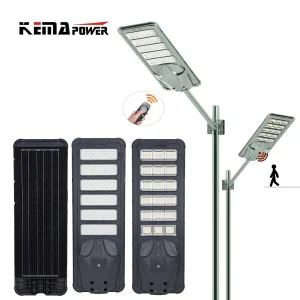
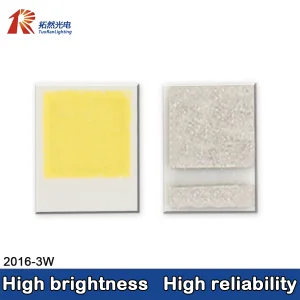
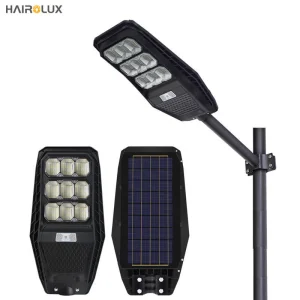
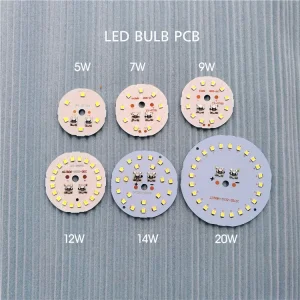
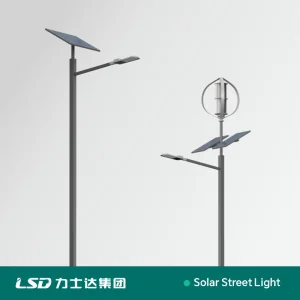
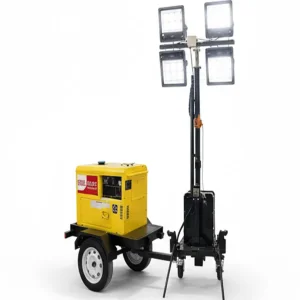
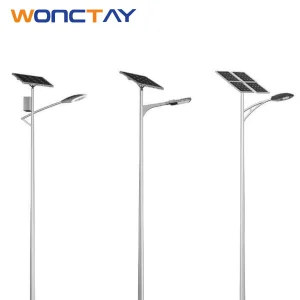
The final eight products expand the platform into high-power integrated solar streetlights, CSP LED chips, waterproof outdoor luminaires, SMD components, hybrid wind-solar IoT monitoring, smart light poles, mobile generator towers, and customized solar lighting. Together with the first product set, they show the breadth required for a practical OEM supply program.
For a complete procurement package, buyers can combine products from both sets under one OEM specification: solar streetlights, LED modules, poles, high-mast structures, controllers, batteries, smart monitoring, and mobile emergency power. This integrated view helps reduce supplier fragmentation and improves accountability across the project lifecycle.
 Penelope Light