In recent years, urban environments have embraced the advancements of technology, particularly through smart IoT street lighting systems. These systems are revolutionizing how cities illuminate their streets, enhance safety, and reduce energy consumption. According to Dr. Laura Bennett, a leading expert in smart city solutions, “Smart IoT street lighting not only improves efficiency but also fosters a sustainable urban landscape.” This quote emphasizes a critical aspect of modern infrastructure.
What are the benefits of smart IoT street lighting systems? The advantages are numerous. They adjust brightness based on real-time conditions, improving visibility while saving energy. This adaptive lighting significantly reduces operational costs for cities. Furthermore, these systems support public safety. Enhanced visibility helps deter crime and provides safer conditions for pedestrians and cyclists.
However, transforming existing street lighting into smart systems presents challenges. Cities must consider budget constraints and the integration of new technologies with legacy systems. While the promise of smart street lighting is compelling, careful planning and execution are essential. Embracing this innovative approach has the potential to reshape urban living. Yet, as with any transition, it's vital to reflect on both the promising advancements and inevitable hurdles that come with change.
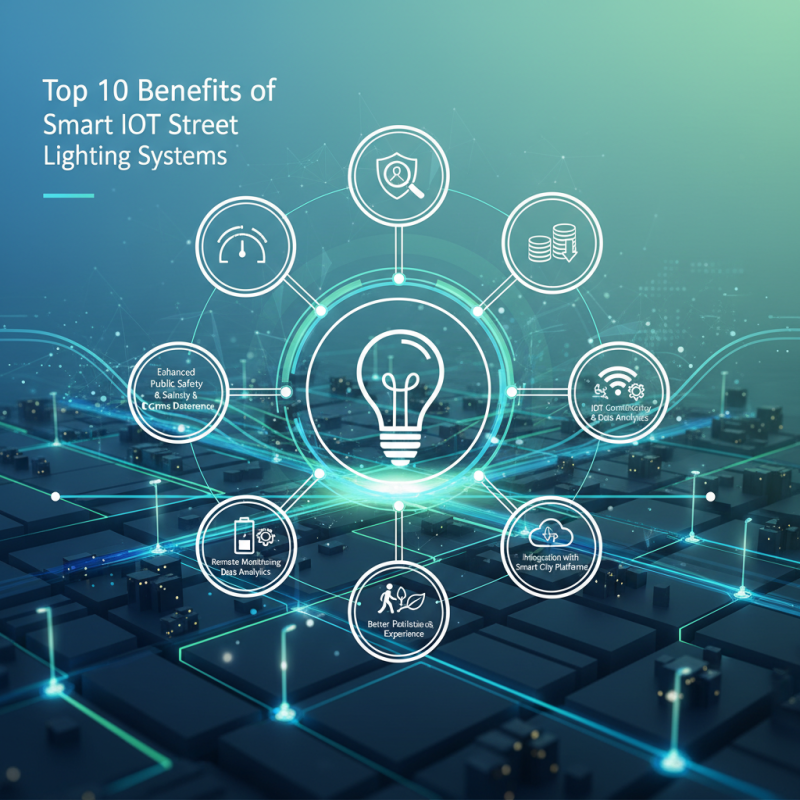
Smart IoT street lighting systems offer significant energy efficiency advantages. By utilizing LED technology and adaptive lighting controls, these systems can reduce energy consumption dramatically. For instance, dimming lights during low-traffic hours can lead to substantial savings. Such laser-focused energy use not only cuts costs but also minimizes environmental impact.
Data-driven analysis enhances this efficiency further. Sensors detect the presence of pedestrians or vehicles, adjusting light output accordingly. This leads to optimal energy use while ensuring public safety. However, it's crucial to address potential privacy concerns related to data collection. Ensuring transparency in how data is used can enhance trust among citizens.
Maintenance becomes easier with intelligent systems. Remote monitoring predicts when a light needs repair, reducing downtime. Yet, this reliance on technology can create vulnerabilities too. A system failure could lead to prolonged outages. Striking the right balance between innovation and reliability is necessary for the success of smart street lighting initiatives.
Smart IoT street lighting systems are transforming public safety measures. These systems enable real-time monitoring of urban environments. According to a report by the International Energy Agency, smart street lighting can reduce energy consumption by up to 75%. This significant reduction allows for increased funding toward public safety initiatives.
Real-time alerts from smart lighting systems enhance overall community security. For example, sensors can detect unusual activity or disturbances. This data is crucial for law enforcement and emergency responders. A study from the National Institute of Justice suggests that timely alerts can reduce crime rates by approximately 30%. Enhanced visibility and immediate feedback can deter criminal activity in urban settings.
Despite their benefits, challenges remain. Implementing smart lighting requires significant investment and infrastructure updates. Not all municipalities can afford these upgrades. Furthermore, the reliance on technology raises concerns over privacy. Data collected from sensors must be protected. Comprehensive strategies are necessary to address these issues while maximizing public safety benefits. The potential for smart IoT street lighting to create safer communities is clear, but it requires thoughtful planning and execution.
| Benefit | Description | Impact on Public Safety | Real-Time Monitoring |
|---|---|---|---|
| Enhanced Visibility | Smart lights adjust brightness based on surrounding conditions. | Improves pedestrian safety at night. | Brightness levels can be monitored and adjusted remotely. |
| Crime Reduction | Deterrence through better-lit areas decreases criminal activity. | Encourages community safety and engagement. | Real-time data helps in monitoring crime hotspots. |
| Intelligent Alerts | Alerts authorities about unusual activities detected by sensors. | Prompt response to emergencies enhances public confidence. | Alerts generated in real-time for quicker action. |
| Energy Efficiency | Reduces energy consumption with smart on/off scheduling. | Allows reallocation of resources for public safety initiatives. | Data on energy usage monitored for optimization. |
| Traffic Management | Adjusts streetlights based on traffic flows for optimal visibility. | Improves overall road safety and reduces accidents. | Traffic data can be analyzed in real time. |
| Environmental Monitoring | Collects data on pollution and weather conditions. | Enables proactive measures for public health. | Real-time environmental data informs city planning. |
| Reduced Light Pollution | Directs light only where needed, minimizing overspill. | Improves night-time visibility for security purposes. | Sensors ensure lights operate only when necessary. |
| Improved Emergency Response | Priority lighting for emergency vehicles during response. | Speeds up emergency services, leading to better outcomes. | Alerts can be triggered automatically for incoming emergencies. |
| Community Engagement | Allows public feedback on lighting conditions and safety. | Fosters trust between community and city management. | Public inputs can be monitored for actionable insights. |
| Scalability | Easily expandable infrastructure as needs increase. | Potential for enhancing safety in growing urban areas. | Monitor and manage large networks with ease. |
Smart IoT street lighting systems offer significant cost savings. These systems can cut maintenance and operational expenses by up to 50%. According to a report by the Smart Cities Council, traditional street lighting incurs high costs due to frequent bulb replacements and random outages. In contrast, smart lights use sensors to monitor performance. They can predict failures before they happen. This proactive maintenance approach reduces the need for emergency repairs.
Moreover, energy savings contribute to lower costs. A study from the Department of Energy shows LED street lights consume 50% less energy than traditional lights. Smart systems use dimming technology, adjusting brightness based on surrounding conditions, further driving down energy consumption. The combined effect can result in substantial savings for city budgets.
However, the initial investment in smart technology can be daunting. Cities must balance the upfront costs with the potential long-term savings. Additionally, transitioning entirely to smart systems requires public confidence in the technology's reliability. Data on long-term performance remains a concern for many municipalities. Investing in pilot programs may be a practical first step to mitigate risks associated with full deployment.
Smart IoT street lighting systems play a crucial role in the connectivity of smart city infrastructure. These systems utilize sensors and data analytics to adapt to real-time conditions. For instance, they adjust light intensity based on ambient light and pedestrian presence. This technology can reduce energy consumption by up to 50%, according to the International Energy Agency.
Research indicates that smart streetlights can serve as nodes in a city’s IoT network. They can support various applications, such as traffic management and environmental monitoring. The integration of these systems fosters enhanced communication between devices, leading to improved urban mobility. A recent report from Deloitte highlights that cities with interconnected lighting systems can see a 30% decrease in traffic congestion.
However, challenges persist. Data security remains a critical concern as these systems rely heavily on network connectivity. Moreover, there is a need for standardization in protocols to ensure devices from different manufacturers can communicate effectively. The evolving nature of smart city technologies demands continuous evaluation to address these issues.
The rise of smart IoT street lighting systems offers numerous environmental benefits. One major advantage is the significant reduction of light pollution. This is crucial for improving nocturnal wildlife habitats and preserving natural ecosystems. In urban areas, uncontrolled street lighting can disrupt animal behavior. With smart systems, lighting can be adjusted based on real-time needs, ensuring minimal disturbance.
Additionally, these systems dramatically lower electricity consumption. Traditional streetlights consume vast amounts of energy. The transition to smart lighting can cut this by up to 50%. This energy efficiency leads to decreased carbon emissions, aiding in climate change mitigation. However, the challenge lies in the initial investment costs for cities. Some municipalities struggle to allocate budgets for such upgrades despite the long-term savings.
On the reliability front, these systems can be quite sensitive to technical issues. They rely on complex sensors and data analytics. If not properly maintained, their efficacy could diminish. There is also a need for public awareness about these changes. Engaging communities in discussions can lead to better acceptance and usage. The journey toward smarter lighting is not without its hurdles, yet the potential benefits are undeniably significant.
: They use LED technology and adaptive controls to reduce energy consumption significantly.
Sensors detect traffic, adjusting light output for optimal energy use and public safety.
They allow for remote monitoring, predicting repairs and minimizing downtime.
Yes, data collection for monitoring can raise privacy issues, necessitating transparency.
They can reduce maintenance and operational costs by up to 50%.
Yes, the upfront investment can be significant, raising concerns about budget allocation.
Traditional lights incur high costs through frequent bulb replacements and outages.
LED street lights use 50% less energy, leading to substantial long-term savings.
A system failure could cause outages, highlighting the need for reliable technology.
Yes, pilot programs can help build confidence and mitigate risks of full implementation.
Smart IoT street lighting systems offer a myriad of advantages that significantly enhance urban living. One of the primary benefits is improved energy efficiency, which leads to substantial cost savings in terms of both maintenance and operational expenses. Furthermore, these systems provide enhanced public safety through real-time monitoring and alerts, ensuring timely responses to incidents. Another notable aspect is their integration with smart city infrastructure, which fosters better connectivity and communication across urban systems.
Additionally, smart IoT street lighting contributes to environmental sustainability by mitigating light pollution and reducing energy consumption. In conclusion, what are the benefits of smart IoT street lighting systems? They promote safer, more efficient, and environmentally friendly urban environments, ultimately contributing to the overall quality of life for citizens.

Penelope Light