LED street lights have become increasingly popular due to their energy efficiency and long lifespan. However, a curious phenomenon has emerged: "Why do some LED street lights look purple or blue?" This question has sparked interest among city planners and residents alike. According to the U.S. Department of Energy, LED street lights can save up to 50% on energy compared to traditional lighting. Yet, color discrepancies in white LEDs, particularly appearing purple or blue, raise concerns about visibility and safety.
The perceived color issues may stem from multiple factors, including the quality of the LED components used and color temperature variations. A report from the International Commission on Illumination notes that improper manufacturing can lead to subpar color rendering. Many cities are now assessing their lighting quality to ensure optimal public safety and aesthetic value. This situation invites scrutiny, as not all LED lights produce the desired warm white hue, leading to unintended consequences in urban areas.
As municipalities fully adopt LED technology, understanding these color anomalies becomes critical. Improving the manufacturing process and adhering to stricter quality control measures can help achieve consistency in LED performance. The evolution of urban lighting remains a topic for reflection, especially as cities strive for effective solutions that enhance both safety and environmental sustainability.
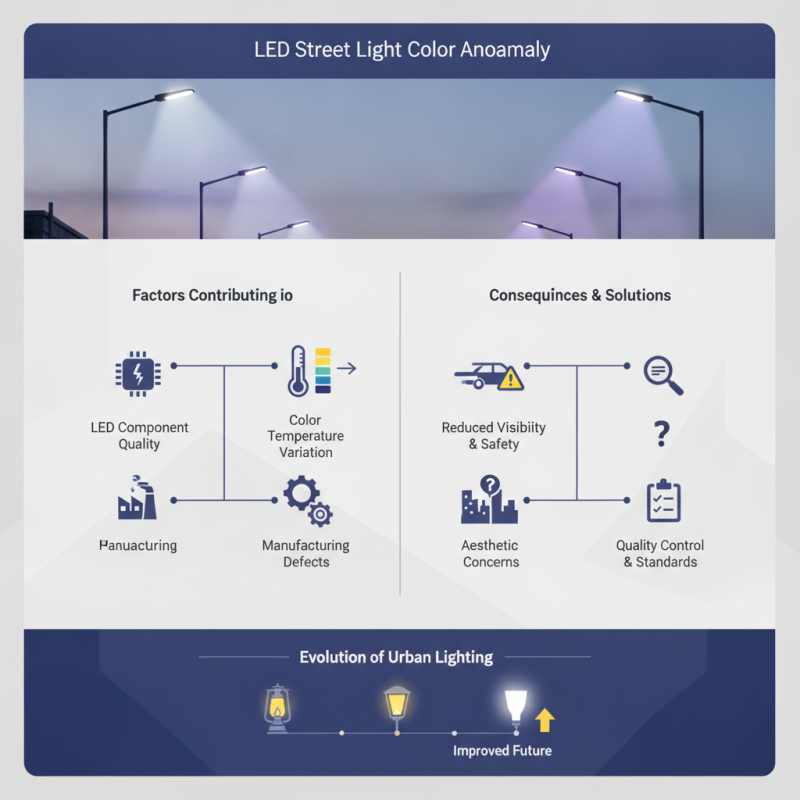
LED street lights are often noted for their distinct purple or blue hues. This unusual color perception can arise from several factors, including the type of phosphor used in the LEDs. Different phosphors can emit various light shades when excited by electric current. This means that one set of street lights may look blue, while another appears more violet.
Another factor is the age of the bulbs. Newer LED technologies tend to have a more consistent color output. However, as the bulbs age, their brightness and color consistency can diminish. This can lead to changes in how the light is perceived by passersby. Street lights also interact with environmental elements, such as fog or rain, which can amplify their color effect, making the light appear even bluer or more purple.
Moreover, human perception plays a crucial role in how we observe these colors. Our eyes can react differently based on surrounding light sources. For instance, streetlights adjacent to brightly lit storefronts may appear less colorful. The emotions associated with colors can also influence our perceptions of safety and comfort in illuminated areas. This complexity requires ongoing reflection on how we understand and design public lighting systems.
LED street lights may sometimes emit purple or blue light. This unusual phenomenon can be attributed to several common causes. One significant factor is the type of phosphor used in the LED lights. Some LEDs use a blue light-emitting diode paired with a yellow phosphor. If the phosphor degrades over time, the blue light becomes more pronounced, creating a purple hue.
Another cause is the temperature of the light. LEDs are sensitive to heat. High temperatures can alter their color output. If the lights are not properly ventilated, this problem will worsen over time. Additionally, aging fixtures might also contribute to changing light colors, as the internal components wear out.
For those managing street lighting, here are a few tips. Regular inspections can help detect premature aging or color shifts. Look for signs of overheating or discoloration. Consider investing in quality fixtures known for longevity. Proper maintenance can prevent unsightly color changes and ensure consistent lighting.
LED technology has transformed street lighting, offering energy efficiency and longevity. However, many cities face an unexpected visual issue: the purple or blue tint in their street lights. This phenomenon often stems from the quality of LED components. Poorly manufactured LEDs can produce an inconsistent spectrum of light, leading to color distortions.
The impact of LED technology on street light appearance is not just about aesthetics. The color emitted affects visibility for drivers and pedestrians. While cooler light can enhance visibility at night, it may also create an uncomfortable atmosphere. Cities sometimes overlook how color temperature influences public perception and safety.
In exploring this issue, there's a balance to achieve. Municipalities and authorities must prioritize quality over cost. It’s essential to invest in reliable LED technology. Reflection on current lighting solutions is necessary. Are they truly serving the community, or merely cutting costs? The long-term effects on urban life should guide decisions. The quest for better street lighting continues.
| Reason | Description | Impact |
|---|---|---|
| Color Temperature | High color temperatures (5000K and above) can emit bluish light. | Can affect nighttime visibility and aesthetics. |
| LED Manufacturing Quality | Lower-quality LEDs may produce unexpected colors due to defects. | Potential for uneven lighting and reduced efficacy. |
| Bin Variations | LEDs come in different bins with slight color variations. | Inconsistent street lighting appearance. |
| Age of the LED | Older LEDs can shift in color as they age and degrade. | Altered light quality and neighborhood perception. |
| Heat Dissipation | Poor cooling can lead to color changes in LED output. | Possible shortened lifespan of street lights. |
| Lens and Diffuser Effects | Certain materials can change the appearance of light. | Influence on visual perception by passersby. |
| Ambient Light Interaction | Surrounding light sources can alter perceived color. | Misleading perception of street safety. |
| Street Light Design | Certain designs can affect light distribution and color. | May lead to public dissatisfaction with street aesthetics. |
| Ballast and Driver Issues | Incompatible or failing ballasts/drivers can affect color. | Inconsistent light output and possible flickering. |
| Installation Quality | Improper installation can lead to light misalignment. | Reduced effectiveness of lighting solutions. |
LED street lights can appear purple or blue due to their light temperature and spectrum. These colors result from the specific wavelengths emitted by the LED technology. Light temperature refers to the appearance of the light, which can shift from warm to cool hues. Cool temperatures often express a bluish tint, while warmer ones lean towards amber. This shift frequently impacts our perception of nighttime environments.
The spectrum of light emitted is crucial. A broader spectrum can make light appear whiter and more vibrant. In some cases, blue light can lead to a cooler ambiance, valued for its visibility. Nonetheless, excessive blue light contributes to light pollution and may disrupt local ecosystems. These factors create an uneven experience for both environments and observers.
Tips for communities: Consider the light spectrum and temperature when installing street lights. Warmer tones may reduce light pollution and benefit wildlife. Regular assessments of the lighting can ensure it meets standards that serve both safety and environmental needs. Monitoring the effects of these choices can lead to better street lighting solutions. Effective communication among local authorities can enhance outcomes.
Environmental factors significantly affect the color appearance of LED street lights. Various gases and particles in the air can alter how light is perceived. For example, when LED lights operate, they may emit a bluish or purplish hue under certain atmospheric conditions. Research indicates that high humidity levels can scatter light. This scattering can cause shifting colors, making street lights appear different than intended.
Pollution also plays a crucial role in color perception. The presence of dust, smoke, and other contaminants can result in a color change. According to the International Commission on Illumination, nearly 30% of urban areas have air quality below safe levels. When these particles interact with LED light, the result may look purple or blue. Not all municipalities monitor these environmental factors effectively, creating inconsistencies in how street lights appear across regions.
Temperature is another critical element. Cold temperatures can alter the intensity and spectrum of LED lighting. In winter months, LED lights may appear cooler, leading to a more violet tint. A report from the Department of Energy highlights that color consistency is a challenge, noting that different manufacturers produce varying hues. These variables underscore the complexities of street lighting, compelling cities to rethink their lighting strategies.
: The color perception is influenced by the phosphor type used in the LEDs. Different phosphors emit various shades.
As LED bulbs age, brightness and color consistency diminish. This can change how the light looks to passersby.
Environmental elements like fog or rain can amplify colors, making lights appear more blue or purple in certain conditions.
Surrounding light sources can alter our visual perception. Lights near bright storefronts may seem less colorful due to contrast.
LED technology offers energy efficiency and longevity but may introduce unexpected visual issues like color distortions.
Cooler light can enhance visibility but might create an uncomfortable atmosphere, affecting public safety perceptions.
Investing in reliable LED technology is essential. Reflecting on solutions is key to serving the community and enhancing urban life.
Light temperature affects how we perceive nighttime environments, shifting from warm to cool hues which can influence comfort levels.
Choosing warmer tones can help reduce light pollution, benefiting both wildlife and nighttime visibility. Regular assessments are essential.
It’s important to evaluate if street lights truly enhance community safety or if they are merely cost-saving measures.
The article "Top 10 Reasons LED Street Lights Appear Purple or Blue?" delves into the intriguing phenomenon of color perception in LED street lighting. It begins by explaining why do some LED street lights look purple or blue, highlighting various factors that influence this appearance. Among the common causes, it identifies the quality of LED technology, where cheaper components may exhibit unusual color emissions, particularly under certain environmental conditions.
Further, the article explores the impact of light temperature and spectrum on how these lights are perceived. It emphasizes that specific wavelengths can contribute to a purple or blue tint. Additionally, environmental factors like atmospheric conditions and surrounding light reflections play a significant role in altering the appearance of street lights. Overall, understanding these elements is crucial for recognizing the factors behind the color variations in LED street lights.

Penelope Light