Solar street lights face a difficult maintenance problem: height, traffic, dust, and limited access. Their panels collect soot, bird deposits, pollen, and fine construction dust. Even a thin grey film can reduce sunlight reaching the photovoltaic cells. The IEA Photovoltaic Power Systems Programme reports that soiling losses commonly range from 2% to 7% annually, although local conditions can produce higher losses. NREL guidance also stresses that performance depends on site conditions, panel angle, rainfall, and cleaning frequency.
So, how should professionals answer the question, “How to clean solar panels on high-altitude street lights?” Dr. Sarah Kurtz, a photovoltaic reliability researcher associated with NREL, offers a practical principle: “Reliable performance depends on understanding the environment, not simply washing the module.” That idea shapes this guide. Cleaning should begin with a risk assessment, not a ladder.
Use approved elevated-access equipment, clean water, a soft non-abrasive brush, and suitable scheduling. Avoid pressure washers, harsh detergents, and walking on panels. Early morning work is usually safer for the equipment because hot glass can dry water too quickly. Check the light’s battery behavior and illumination afterward.
Small details matter.
A soft brush can still cause scratches if grit remains trapped. A water-only method may fail where oily road residue exists. That is an uncomfortable limitation. The safest plan combines visual inspection, measured energy output, weather records, and trained maintenance crews. This article examines seven practical cleaning methods while recognizing that one routine will not suit every high-street installation.
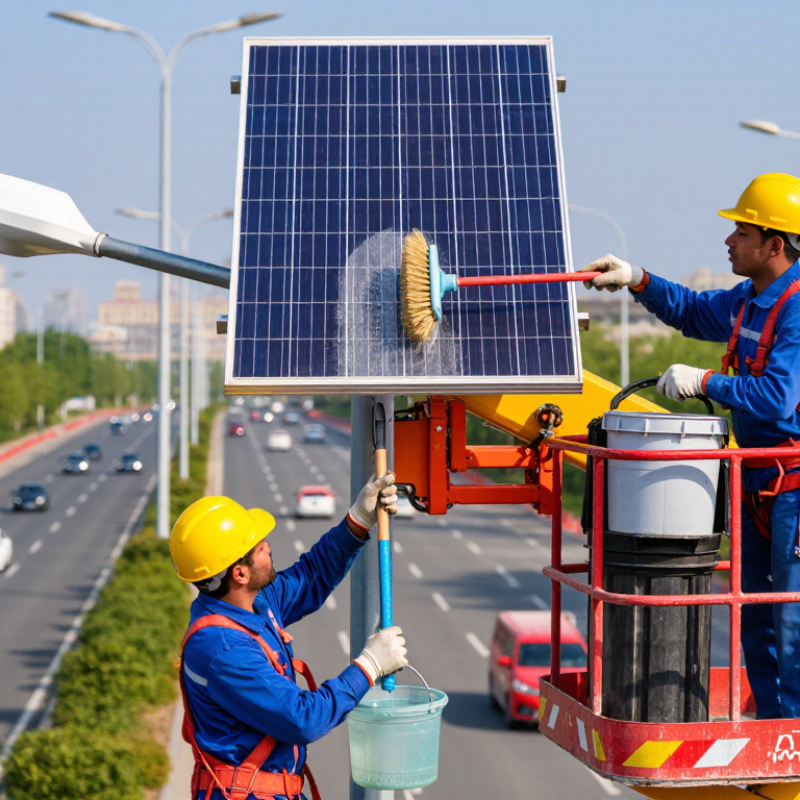
Cleaning solar panels on high street lights should begin with a condition assessment, not a hose. From site inspections, I check for dust, bird residue, leaf buildup, cracked glass, loose frames, and shaded areas. Not every panel needs washing.
Record each light’s location, panel appearance, battery condition, and recent energy performance. A simple photo log helps reveal gradual changes. I once underestimated thin road dust because the panel looked clean from ground level. The output showed otherwise. Use binoculars or a safe inspection platform instead of climbing the pole.
Plan cleaning during dry, calm weather and low-traffic periods. Avoid wet panels, strong winds, lightning, and extreme heat. A trained worker should control the work zone and use approved access equipment. Isolate the lighting system when required, then rinse loose dirt with clean water. Use a soft, non-abrasive brush for stubborn marks. Never scrape glass or use harsh chemicals.
Water quality matters. Hard water can leave mineral spots that reduce light entry. After cleaning, inspect the surface for streaks, damaged seals, and trapped moisture. Compare nighttime brightness and recorded performance over the next few days. A seasonal schedule may work for quiet streets, while dusty or tree-lined locations need more frequent checks. Weather changes can make a fixed schedule imperfect, so revise it after each inspection.
Inspect from ground level during daylight. Look for dust, bird residue, leaves, cracks, loose frames, and damaged cables. Use binoculars or approved access equipment. Do not climb the pole.
Choose dry, calm weather and cooler hours. Avoid rain, lightning, strong winds, extreme heat, and busy traffic periods. Hot glass dries quickly. That can leave mineral marks.
Use clean or deionized water, a soft brush, a squeegee, and lint-free cloths. Keep tools in a stable bag. Avoid metal scrapers, harsh chemicals, and high-pressure sprays. These may scratch glass or damage seals.
Create a visible exclusion zone with approved barriers. Follow local traffic and work-at-height procedures. Only trained workers should use lifting equipment or fall-arrest systems. Keep batteries, controllers, and cable connections dry.
Remove loose dirt gently before rinsing. Wipe from the upper edge downward with light pressure. Do not spray directly into junction boxes. Never scrape stubborn marks from the glass.
Yes, dust, soot, leaves, and bird residue can block light. Nearby trees may also create partial shade. Compare nighttime brightness, voltage, battery condition, and energy records. One inspection may not reveal the full problem.
Quiet streets may need seasonal inspections. Dusty or tree-lined locations may need more frequent checks. Reinspect after dust storms or nearby construction. A fixed schedule can be imperfect.
Record the location, panel appearance, weather, tools, cleaning date, and detected defects. Take photographs from similar positions. Check for streaks, damaged seals, and trapped moisture. Visual checks can miss internal faults, so measurements still matter.
Cleaning solar panels on high street lights requires careful planning, suitable equipment, and strict attention to safety. Before starting, assess the panel condition, weather, height, surrounding traffic, and access requirements, then choose a safe cleaning schedule when sunlight and wind are limited. The key question is: How to clean solar panels on high-altitude street lights? Begin by preparing clean water, a soft brush, a non-abrasive cloth, and appropriate access and protective equipment. Follow high street safety procedures, keep pedestrians and vehicles clear, and avoid working during unstable weather.
First, gently remove loose dust, leaves, and other debris without applying force that could scratch the surface. Wash the panels with clean water and a soft brush, avoiding harsh chemicals and abrasive tools that may damage the protective coating. After cleaning, inspect the panel, frame, cables, and mounting points for visible problems. Finally, confirm that the system is receiving sunlight and producing power efficiently. Regular inspections and carefully timed cleaning can help maintain reliable performance and extend the service life of the solar lighting system.

 Penelope Light