In the modern era of urban lighting, LED street lamps are becoming increasingly popular. Their energy efficiency and long lifespan make them a preferred choice for cities worldwide. However, the performance and longevity of these lamps heavily depend on one critical component: the heat sink. Why do LED street lamps need high-quality heat sinks? A recent report from the International Energy Agency (IEA) reveals that effective heat dissipation can extend the lifespan of LED components by as much as 30%.
High-quality heat sinks ensure optimal thermal management, which is essential for maintaining consistent light output and preventing overheating. With failing heat sinks, LED street lamps may dim or, worse, fail prematurely, resulting in increased maintenance costs. Moreover, according to a study from the Lighting Research Center, about 35% of LED failures are linked to inadequate thermal management. This statistic underscores the vital importance of selecting the right heat sink for achieving reliable, long-term lighting solutions.
Choosing the right heat sink requires careful consideration of material, design, and thermal conductivity. It’s a complex decision, and poor choices can lead to inefficiencies. The implications go beyond economics; they impact safety and urban aesthetics. Quality heat sinks may require a higher initial investment, but their benefits are substantial, improving performance and reducing energy consumption in the long run.
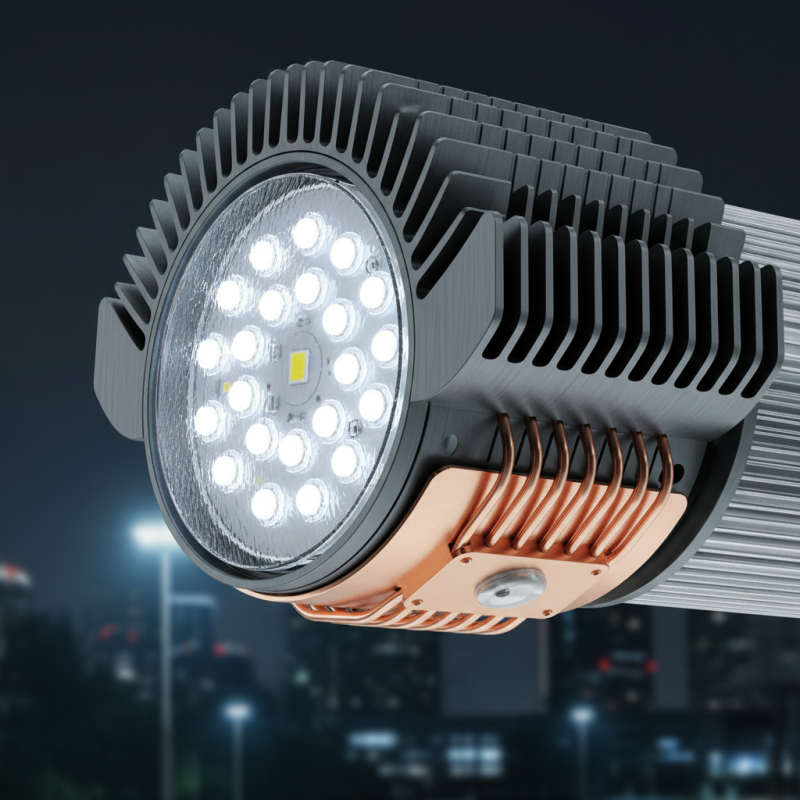
Heat sinks play a pivotal role in the performance and longevity of LED street lamps. These devices dissipate heat generated by LED components, ensuring optimal functioning. As LEDs produce light efficiently, they also generate heat. Without proper cooling, LEDs can degrade quickly, leading to reduced light output and lifespan. Effective heat sinks absorb and transfer heat away, maintaining the temperature within safe limits.
Choosing the right heat sink involves understanding thermal conductivity, material selection, and design. Aluminum is often preferred due to its lightweight nature and excellent heat dissipation properties. However, not all designs are equally effective. Some may look appealing but lack proper airflow, hindering performance. It’s essential to assess the heat sink's surface area and fin design. Larger surface areas offer improved heat dissipation.
In some cases, manufacturers may overlook heat sink details during production. This oversight can lead to failures in high-temperature environments. While it’s easy to focus on lumens and efficiency, thermal management should not be neglected. Proper testing and thermal simulations can provide insights into a heat sink’s performance before deployment. By prioritizing heat management, we can enhance the reliability of LED street lighting systems.
When selecting heat sinks for LED street lamps, several key factors must be evaluated. The primary function of a heat sink is to dissipate heat efficiently. According to industry reports, improper heat management can reduce LED lifespan by up to 50%. Choosing materials with high thermal conductivity, such as aluminum or copper, is crucial for effective heat dissipation.
Another important element to consider is the design of the heat sink. The surface area plays a significant role in heat transfer. Fin designs can enhance air circulation, thus improving cooling performance. A study published in the Journal of Thermal Science emphasized the importance of maximizing surface area to achieve better thermal management. Additionally, considering the environmental conditions where the lamps will be installed is essential. Corrosion resistance and durability can impact longevity and maintenance needs.
Lastly, assessing the heat sink's size and weight is necessary for installation. A bulky heat sink could pose logistical challenges. However, a smaller design might compromise cooling capacity. This balancing act often requires careful consideration. The complexity of these factors can lead to potential pitfalls in selection. Attention to detail during the selection process can prevent costly mistakes and ensure optimal performance.
When selecting heat sinks for LED street lamps, one must consider the properties of various materials. Aluminum is often the top choice due to its lightweight nature and excellent thermal conductivity. Its ability to dissipate heat efficiently ensures the longevity of LED components, making it ideal for street lighting. However, aluminum can corrode if not properly treated. This raises concerns about durability in harsh environments.
Copper is another popular option. It conducts heat better than aluminum, which can mean superior performance in high-temperature situations. However, copper is heavier and more expensive. This might be a challenge for mass production, and the added weight could affect installation. The decision largely depends on the specific application and environmental factors.
There are composite materials as well. These can offer a good balance between weight, cost, and performance. However, they often require complex manufacturing processes, which can reduce reliability. A thorough examination of operational conditions must guide the material choice. Each option has its pros and cons, highlighting the importance of tailored solutions in lighting design.
| Material | Thermal Conductivity (W/mK) | Density (g/cm³) | Weight (kg/m³) | Corrosion Resistance | Cost (USD/kg) |
|---|---|---|---|---|---|
| Aluminum | 205 | 2.7 | 2700 | Good | 2.5 |
| Copper | 390 | 8.96 | 8960 | Fair | 6.0 |
| Graphite | 140 | 2.26 | 2260 | Excellent | 5.0 |
| Stainless Steel | 16 | 7.93 | 7930 | Very Good | 5.5 |
When evaluating heat sink efficiency for LED street lamps, the focus should be on several key performance metrics. Thermal conductivity is fundamental. Ideally, a heat sink should have a thermal conductivity rating above 200 W/m·K. This ensures effective heat dissipation, crucial for maintaining LED lifespan. Poorly designed heat sinks can lead to temperature increases, potentially reducing lamp efficacy by up to 30%.
Consider the surface area as well. A larger surface area allows for better heat dispersion. Research indicates that increasing the surface area by 50% can improve thermal performance by nearly 20%. However, it’s vital to balance size with installation constraints in urban settings. Overly large heat sinks can complicate installation and maintenance.
Material choice also plays a critical role. Aluminum alloys are popular due to their lightweight and corrosion-resistant properties. However, these materials may not perform as well in extreme temperatures. An analysis showed that copper heat sinks outperformed aluminum by 15% under high-stress conditions. This raises questions about the suitability of material choices based on local climate conditions. Ultimately, selecting the right heat sink requires a comprehensive evaluation of these metrics to ensure optimal performance in diverse environments.
When installing LED heat sinks, proper placement is crucial. Heat sinks should be located in areas with good airflow to optimize heat dissipation. A report by the Department of Energy indicates that effective thermal management can increase LED lifespan by 50%. Placement too close to other components may lead to overheating.
Regular maintenance is also key. Inspecting heat sinks for dust build-up is important. Dust can hinder airflow and trap heat. Cleaning heat sinks twice a year is advisable. Some professionals suggest using compressed air for effective cleaning. This small step can prevent unnecessary failures.
Monitor temperature levels frequently. Ideal operating temperatures for LED fixtures are crucial for peak performance. Frequent overheating can degrade the components faster. If temperatures exceed recommended levels, it's essential to consider redesigning the heat sink layout. This adaptation ensures reliability, extending the life of LED street lamps. Observing these practices can enhance performance and reliability.
: Heat sinks dissipate heat generated by LEDs, ensuring optimal performance and longevity.
Improper heat management can reduce the lifespan of LEDs by up to 50%.
Aluminum and copper are preferred for their high thermal conductivity and heat dissipation properties.
Larger surface areas improve heat dissipation, enhancing overall thermal management.
Fin design and airflow are crucial for improving cooling performance.
Different materials perform differently in temperature extremes. Copper often outperforms aluminum under stress.
A poorly designed heat sink may raise temperatures, decreasing lamp efficacy by up to 30%.
Bulky heat sinks can complicate installation, while smaller ones may compromise cooling capacity.
Attention to thermal management details is vital for ensuring reliability in high-temperature environments.
They provide insights into a heat sink's performance before deployment, aiding optimal selection.
High-quality heat sinks play a crucial role in the performance and longevity of LED street lamps. The primary question that arises is, "Why do LED street lamps need high-quality heat sinks?" This is because efficient heat dissipation is essential to prevent overheating, which can reduce the lifespan and efficacy of the LEDs. When selecting heat sinks, several key factors must be considered, including material types, thermal conductivity, and design properties, which will impact their efficiency and performance metrics.
Different materials, such as aluminum and copper, offer various benefits, and understanding these properties can help in making the right choice. Additionally, evaluating the heat sink’s efficiency through metrics such as thermal resistance is vital for ensuring optimal performance. Lastly, proper installation and maintenance tips are essential to guarantee that the heat sinks function effectively over time, ensuring that the LED street lamps remain reliable and energy-efficient.

Penelope Light