Installing solar street lights in cloudy regions can be challenging. According to a report by the International Renewable Energy Agency, solar energy accounts for 14% of the total global energy supply. However, performance varies greatly in less sunlit areas. Experts emphasize the importance of proper installation and technology use in these conditions.
Dr. Lisa Chan, a solar energy specialist, states, “Understanding how to install solar street lights in cloudy regions is vital for maximizing efficiency.” Her insights are critical for addressing common misconceptions. Many people underestimate the adaptability of solar technology. For example, using high-capacity batteries can compensate for lower solar input days.
Some installations have faced challenges. Issues like inadequate light output and battery depletion can arise if not properly addressed. Using daylight sensors and energy-efficient LEDs can mitigate these problems. Exploring all options and seeking expert advice can lead to effective solutions in cloudy areas. It's essential to learn from past mistakes to improve future installations.
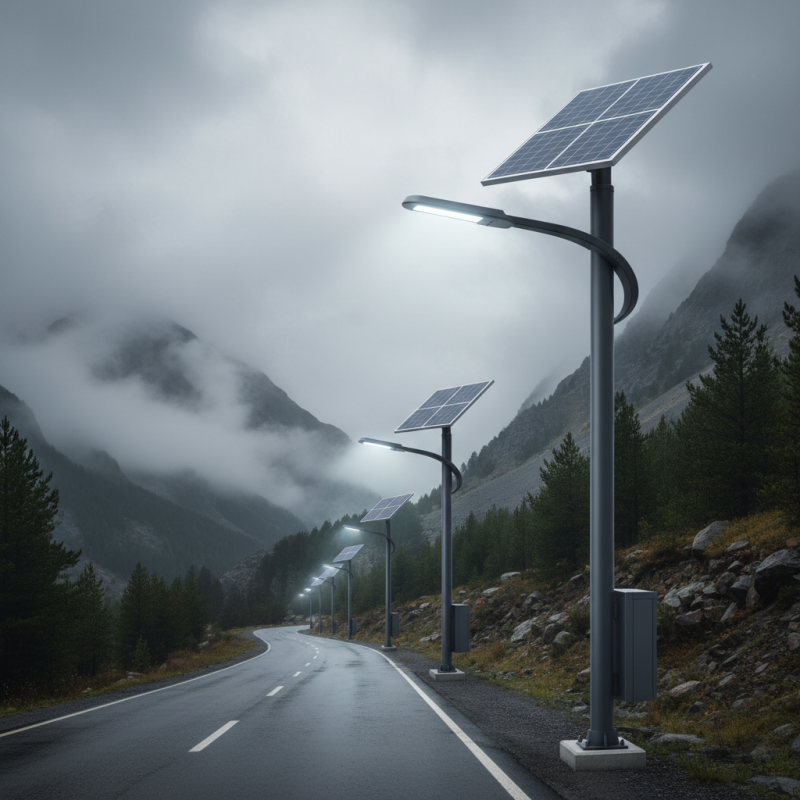
Choosing the Right Type of Solar Street Lights for Cloudy Areas
When installing solar street lights in cloudy areas, selecting the appropriate type is critical. Research indicates that solar street lights can still be efficient, even with low sunlight exposure, provided they are designed with energy storage in mind. According to a report by the International Renewable Energy Agency (IRENA), advanced lithium-ion batteries can store enough energy to power lights during extended cloudy periods. This allows consistent operation, increasing reliability.
Another essential factor is the wattage of the solar lights. In regions with frequent cloud cover, choosing lights with higher wattage and lumen output will ensure visibility during dark hours. A study from the U.S. Department of Energy highlights that high-lumen fixtures can offer the same brightness as traditional lights while using less energy. However, users must balance brightness with energy capacity to avoid over-dependence on battery power.
Finally, solar panel orientation plays a significant role. Installing panels at an angle can capture even diffuse sunlight more effectively. Some reports suggest that a tilt of 30 to 45 degrees maximizes exposure to indirect light. However, this setup may require adjustments in installation, sparking debate among installers. These considerations can dramatically influence the performance of solar street lights in overcast climates.
Solar Street Light Performance in Cloudy Conditions
Evaluating Location: Factors Influencing Solar Energy Performance
When installing solar street lights in areas with cloudy weather, evaluating the location is crucial. Several factors significantly affect solar energy performance. One primary factor is the angle of sunlight. Ideally, lights should be installed at an angle that maximizes sun exposure. This position may vary depending on geographical location and season. It’s important to assess local weather patterns over an extended period.
Another consideration is obstructions around the installation site. Nearby trees, buildings, or other structures can cast shadows, reducing sunlight reach. Analyzing potential growth of foliage and future construction plans is wise. Digging into historical weather data can provide insights into typical cloud cover. A thorough assessment of these elements can enhance the effectiveness of solar lights in less ideal conditions.
While cloud cover may seem a challenging barrier, it’s not insurmountable. Solar technology continues to advance, making it more efficient in various situations. Assessing, adapting, and, at times, reevaluating your location choice is vital for successful installation. Flexibility and ongoing observation are key factors in optimizing solar lighting performance.
Installation Best Practices: Ensuring Optimal Sunlight Exposure
When installing solar street lights, optimal sunlight exposure is crucial, especially in areas with variable weather. According to the National Renewable Energy Laboratory, more than 60% of solar performance is linked to proper light conditions. Ensuring that your solar panels capture maximum sunlight can significantly enhance performance.
Tip 1: Prioritize Location. If possible, avoid placing street lights in shaded areas caused by trees or buildings. Conduct a thorough analysis of obstructions that may block sunlight throughout the day. This can improve energy yield by an estimated 25%, as shaded panels perform much poorer.
Maintaining an ideal angle for solar panels is essential. Aim for a tilt between 30 to 45 degrees to harness sunlight effectively. As per Solar Energy Industries Association data, maintaining this angle can increase energy collection by nearly 15% during winter months.
Tip 2: Monitor Weather Patterns. Assess historical weather data for your installation area. This information can inform your decision on where to set up lights to minimize cloud cover impact. Noting that solar energy generation can decrease by 10-20% on cloudy days can help plan for adequate battery storage.
Lastly, consider testing different locations within the site. Each site presents unique factors that affect sunlight exposure. A pilot deployment can reveal unforeseen shading issues, aiding in informed decision-making. Uncertainty can lead to poor choices, so constant evaluation is key.
China Top 10 Tips for Installing Solar Street Lights in Clouds
| Tip No. |
Installation Tip |
Description |
Optimal Sunlight Exposure |
| 1 |
Choose the Right Location |
Select an area with minimal shading to maximize sunlight. |
South-facing areas preferred. |
| 2 |
Consider Weather Patterns |
Evaluate seasonal cloud cover and adjust placements accordingly. |
Higher altitudes may receive better sunlight. |
| 3 |
Tilt the Panels |
Adjust the angle of the solar panels for optimal sunlight capture. |
Optimal tilt during winter months can enhance efficiency. |
| 4 |
Regular Maintenance |
Keep panels clean and free of debris to ensure maximum efficiency. |
Monthly inspections recommended. |
| 5 |
Use High-Efficiency Panels |
Select solar panels with high conversion efficiency to maximize output. |
Look for panels with over 20% efficiency. |
| 6 |
Optimize Battery Usage |
Choose batteries that can store enough energy for extended cloudy days. |
Consider Lithium-ion batteries for longer lifespan. |
| 7 |
Implement Smart Lighting Controls |
Use timers or motion sensors to optimize energy use. |
Reduce energy consumption when not needed. |
| 8 |
Community Engagement |
Involve the community in placement discussions to ensure effective installation. |
Gather feedback on preferred locations. |
| 9 |
Monitor Performance |
Regularly track energy production and adjust as necessary. |
Annual performance reports advised. |
| 10 |
Plan for Future Expansion |
Design installation with potential for future solar street lights in mind. |
Space for additional units can enhance overall efficiency. |
Maintaining Solar Street Lights: Tips for Efficiency in Overcast Conditions
Solar street lights can be efficient even in overcast conditions. To maintain their performance, proper installation and care are essential. Research indicates that solar energy production can decrease by 25-50% on cloudy days. Hence, the positioning and angle of the solar panels are critical. Install them to absorb maximum sunlight, even in less than ideal weather.
Regular maintenance is crucial. Clean the solar panels periodically to remove dirt and debris. This ensures optimal light absorption, especially when sunlight is limited. Batteries should be checked and replaced every three to five years, depending on usage. Using high-capacity batteries can enhance efficiency in cloudy climates, according to industry reports.
Monitoring the light output is also vital. If the lights dim unexpectedly, this may indicate a battery issue or a problem with the solar panel's connection. Keeping a log of performance can help identify patterns. Learning from these observations leads to better management of solar street lights, especially in challenging weather.
Understanding Local Regulations and Incentives for Solar Installations
Understanding local regulations is crucial when installing solar street lights in cloudy regions. Different areas have unique policies that affect installation processes. Researching these regulations is essential. This includes zoning laws, permits, and construction guidelines. Local governments may have specific requirements, so always verify before starting.
Incentives can significantly impact the project’s overall cost. Some regions offer tax credits or rebates for using renewable energy. These financial benefits encourage installations. Aligning your project with local incentives can lead to substantial savings. However, understanding the fine print is equally important. Some incentives may come with strict conditions, requiring careful planning.
Balancing aesthetics and functionality in compliance with regulations is challenging. Solar street lights should blend with the environment while meeting safety standards. Community feedback can help address potential concerns. Engaging local stakeholders may uncover hidden viewpoints, leading to improved project outcomes. Remember that patience and adaptability are key during this process.
FAQS
: Solar street lights can function well in cloudy areas by using energy storage solutions, enabling reliable performance during low sunlight.
Choosing higher wattage lights is crucial for adequate illumination. This helps ensure visibility during prolonged darkness under frequent cloud cover.
Installing solar panels at a 30 to 45-degree angle maximizes sunlight capture, even when light is diffuse, optimizing energy collection.
Evaluating shading from trees or structures is vital. This can enhance energy yield and reduce potential performance issues by up to 25%.
Understanding historical weather data helps assess cloud cover impact. Solar energy generation may drop by 10-20% on cloudy days, affecting planning.
Each area has unique zoning laws and permit requirements. It’s essential to research these regulations before starting an installation project.
Many regions offer financial incentives like tax credits. However, they may also have strict conditions that require careful planning to benefit fully.
Engaging local stakeholders can reveal overlooked concerns. This collaboration can lead to better aesthetics and functionality, fulfilling community needs.
Piloting different locations for testing can uncover unforeseen shading issues. Continuous evaluation is necessary to ensure proper sunlight exposure.
Designs should blend with the environment while adhering to safety standards. Finding this balance may require patience and adaptive strategies.
Conclusion
When considering how to install solar street lights in cloudy regions, it's crucial to choose the right type of lights designed for lower sunlight conditions. Assessing the location is vital, as factors such as surrounding structures, vegetation, and grid power access can significantly influence solar energy performance. Optimal installation practices, such as positioning lights at angles that maximize sunlight exposure, can enhance efficiency even on overcast days.
Additionally, ongoing maintenance is essential to ensure the solar street lights remain operational and efficient despite persistent cloud cover. Regular cleaning and monitoring of the system can aid in sustaining performance. Furthermore, it's important to understand local regulations and potential incentives for solar installations, as these can provide valuable support and resources for your project. By following these key guidelines, you can successfully install solar street lights that function effectively in cloudy conditions.

 Penelope Light