China Best PWM vs MPPT What is Better for Solar Lights?

Time:2026-05-19 Author:Aria
0%

When exploring solar lights, a key question arises: "What is the difference between PWM and MPPT in solar lights?" Experts in the field, such as Dr. John Miller, emphasize that understanding this distinction is crucial for effective solar energy use. He states, "Choosing the right controller can impact the efficiency of your solar system significantly."

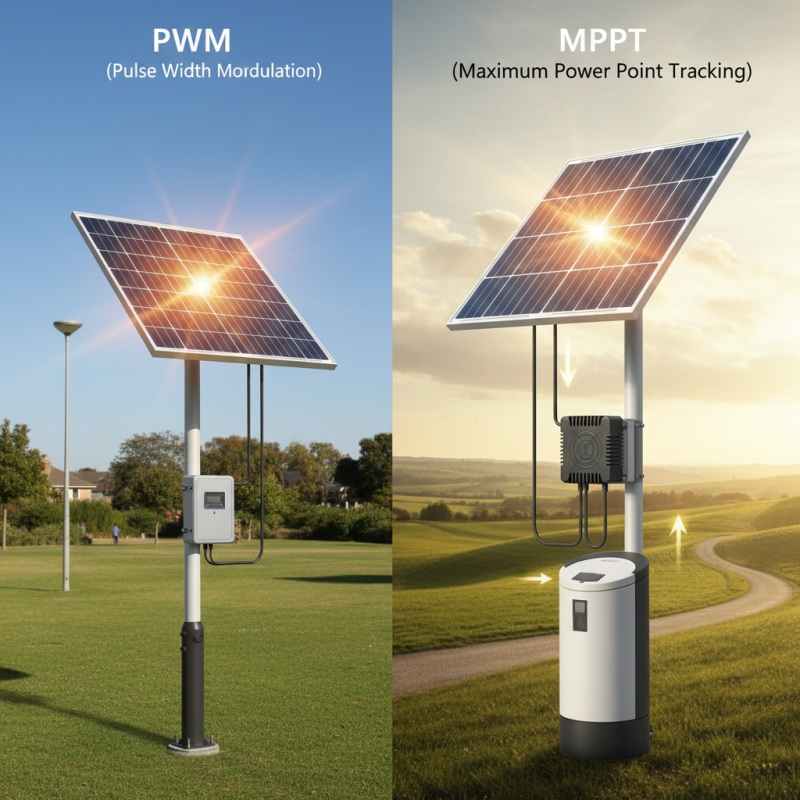
PWM, or Pulse Width Modulation, is a simpler technology. It regulates voltage and current to keep the battery charged. While effective, it may not always optimize energy production. In contrast, MPPT, or Maximum Power Point Tracking, offers advanced efficiency. It adjusts to changing sunlight conditions, capturing more energy for storage.

For users, making the right choice depends on the application. If budget constraints exist, PWM might suffice. However, if maximizing energy yield is the goal, MPPT should be the focus. The efficiency gained can lead to better performance over time. Understanding these differences is essential for anyone invested in solar energy solutions. Ultimately, selecting between PWM and MPPT could shape the future of solar light efficiency.
China Best PWM vs MPPT What is Better for Solar Lights?

Comparison of PWM and MPPT Technology in Solar Lights

When choosing a solar light system, understanding PWM and MPPT technologies is crucial. PWM, or Pulse Width Modulation, controls the power output by varying the voltage. It's simpler and usually cheaper, making it common in basic solar applications. However, its efficiency can drop in low sunlight conditions. Many users overlook this limitation, expecting consistent performance.

On the other hand, MPPT, or Maximum Power Point Tracking, continuously optimizes the power extraction from the solar panels. It adapts to changing sunlight conditions. This technology is particularly beneficial for systems in varying weather. However, MPPT systems are more complex and often pricier. Users may feel tempted to choose the cheaper option, but long-term performance might suffer as a result.

Understanding these differences helps in making informed decisions. Consider the nuances and specifics of your solar installation. Evaluate your location's sunlight consistency. This can significantly influence your overall satisfaction with the solar light system. Investing in the right technology can make a substantial difference in efficiency and reliability.

Understanding PWM (Pulse Width Modulation) for Solar Applications

Pulse Width Modulation (PWM) is a widely used technique in solar applications. It plays a crucial role in controlling the voltage and current delivered to solar lights. PWM regulators adjust the power output by changing the width of the pulses in a fixed frequency. This ensures that the solar lights receive just the right amount of energy.

In a PWM system, efficiency is often a focus. The goal is to maximize battery charging and minimize energy waste. However, one issue is that PWM may not always provide full efficiency in varying sunlight conditions. When light levels change quickly, the response may lag. This can lead to undercharging or overcharging, which may reduce battery lifespan.

Despite its limitations, PWM remains a reliable choice for basic solar light systems. They are generally more affordable and easier to install compared to other solutions. The simplicity of PWM makes it a popular option for smaller scale installations. Yet, users must consider their specific energy needs. PWM might not be ideal for all situations, especially when optimal efficiency is required.

Exploring MPPT (Maximum Power Point Tracking) Technology Benefits

MPPT, or Maximum Power Point Tracking, is a remarkable technology used in solar energy systems. Its primary function is to maximize the energy harvested from solar panels. By constantly monitoring and adjusting the load, MPPT can respond swiftly to changing sunlight conditions. This adaptability helps in optimizing solar energy conversion, especially during cloudy days or varying light intensity.

This technology works by keeping the solar panel operating at its optimal voltage and current levels. When sunlight conditions change, MPPT adjusts to maintain peak performance. This results in more energy production compared to traditional systems. Users often notice an increase in efficiency. However, adopting MPPT technology may require a higher upfront cost.

Some might hesitate due to complexity. Not every user feels comfortable with advanced systems. Simplistic PWM (Pulse Width Modulation) might seem easier to use. Yet, the benefits of MPPT often outweigh initial concerns. Users can achieve greater energy yield. Understanding these trade-offs is essential for informed choices. Each solar setup must balance ease of use with performance potential.

Comparison of PWM and MPPT Efficiency for Solar Lights

The chart above illustrates the efficiency comparison between PWM (Pulse Width Modulation) and MPPT (Maximum Power Point Tracking) technologies for solar lights. MPPT technology significantly outperforms PWM in terms of efficiency, making it the preferred choice for optimizing solar energy usage.

Key Factors to Consider When Choosing Between PWM and MPPT

When choosing between PWM and MPPT for solar lights, it's essential to evaluate multiple factors. PWM (Pulse Width Modulation) controllers are simpler and often more affordable. They are efficient at low loads and work well in stable conditions. However, they may not provide maximum efficiency under varying sunlight.

On the other hand, MPPT (Maximum Power Point Tracking) controllers adapt to changing light conditions. They ensure that solar panels produce the most energy possible. This feature makes MPPT systems more effective, especially in fluctuating weather. They are ideal for larger installations but come with a higher cost.

Battery type also plays a role in this decision. Some batteries perform better with PWM, while others align more with MPPT systems. It’s crucial to match the controller with the type of battery used. Consider local climate, energy needs, and budget restraints. Finding the right balance is key; both options have their strengths and weaknesses.

Performance Metrics: Efficiency, Cost, and Reliability in Solar Systems

When comparing PWM (Pulse Width Modulation) and MPPT (Maximum Power Point Tracking) technology for solar lights, efficiency plays a crucial role. MPPT systems are known for their higher efficiency rates, often exceeding 95%. In contrast, PWM systems typically operate at efficiencies around 70-80%. This difference can significantly influence overall energy yield, especially in low-light conditions.

Cost is another vital metric. MPPT controllers generally come with a higher upfront cost, often 20-30% more than PWM controllers. However, this initial investment can lead to improved long-term savings. Studies indicate that MPPT systems can generate up to 30% more energy from the same solar panel setup over time. For users focused on maximizing their energy output, this presents a compelling case.

Reliability is essential in solar systems. MPPT controllers are designed to adapt to varying solar input, leading to fewer performance losses. However, they can be more complex, which might lead to higher maintenance costs. In contrast, PWM controllers are simpler and often require less frequent servicing, making them appealing for certain applications. Evaluating these metrics helps in making informed choices tailored to specific needs and conditions.

FAQS

: What is PWM technology in solar lights?

: PWM, or Pulse Width Modulation, controls power output by varying voltage. It's simple and often cheaper.

What limitations does PWM have?

PWM's efficiency decreases in low sunlight conditions. Users often overlook this issue, expecting stable performance.

How does MPPT differ from PWM?

MPPT, or Maximum Power Point Tracking, continuously optimizes energy extraction from solar panels. It adapts to changing sunlight.

Is MPPT more efficient than PWM?

Yes, MPPT systems typically produce more energy, especially in variable weather conditions. Users notice increased efficiency often.

Why might some choose PWM over MPPT?

Some users prefer PWM for its simplicity and lower cost. However, long-term performance may not be as reliable.

What factors should I consider when choosing between PWM and MPPT?

Evaluate your local sunlight conditions, battery type, energy needs, and budget. Each option has strengths and weaknesses.

Can all batteries work with PWM or MPPT?

No, compatibility varies. Some batteries perform better with PWM, while others are suited for MPPT systems.

Is MPPT technology more complex?

Yes, MPPT can be complex and may intimidate some users. However, the energy yield often justifies the complexity.

What should I keep in mind when investing in solar technology?

Investing in the right technology is crucial. Assessing your location’s sunlight consistency can lead to better overall satisfaction.

Are there hidden costs with MPPT systems?

Yes, MPPT systems typically have higher upfront costs. Users should weigh these against potential long-term benefits.

Conclusion

The article titled "China Best PWM vs MPPT: What is Better for Solar Lights?" delves into the essential differences between two prominent solar technologies: Pulse Width Modulation (PWM) and Maximum Power Point Tracking (MPPT). It outlines the fundamental operational principles of PWM, which adjusts the voltage to maintain the battery's charge, and contrasts this with MPPT, which optimizes the energy harvested from solar panels by continuously tracking the maximum power point.

When asking, "What is the difference between PWM and MPPT in solar lights?", key factors such as efficiency, cost, and reliability are emphasized. PWM systems are generally simpler and less expensive but may not be as efficient in energy conversion compared to MPPT systems, which excel in maximizing power output. Ultimately, the choice between PWM and MPPT hinges on the specific needs of the solar installation, including budget constraints and desired performance metrics.

Aria

Aria

Aria is a dedicated marketing professional with a deep passion for innovative strategies and a keen understanding of our company's product offerings. With a wealth of experience in the industry, Aria excels at crafting engaging content that highlights the unique features and benefits of our......