When exploring how to calculate the lumens for a solar street light, one can turn to industry experts for guidance. John Smith, a leading figure in solar technology, emphasizes, "Understanding lumens is crucial for efficient lighting solutions." His insights highlight the importance of accurate lumen calculations in enhancing visibility and safety in urban areas.
Calculating lumens requires considering various factors. The solar panel's efficiency, battery capacity, and the intended height of light poles all play a role. Often, people overlook the influence of local environmental conditions, which can affect performance. A light that works well in one area may underperform in another.
In practice, achieving precise calculations is not always easy. Many engineers face challenges in determining the right balance between brightness and energy consumption. Miscalculations can lead to inadequate lighting or wasted energy. Thus, mastering the question "How to calculate the lumens for a solar street light?" is essential for those involved in solar lighting projects. It's an ongoing learning process, not a one-time solution.
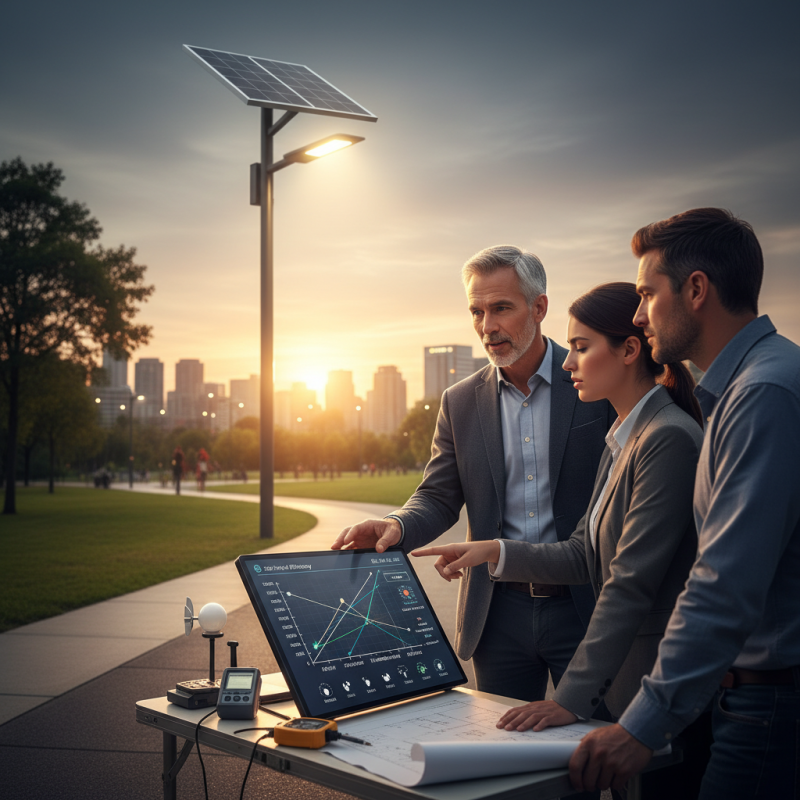
Understanding lumens is crucial for designing effective solar street lighting. Lumens measure the total amount of visible light emitted by a source. In street lighting, higher lumens indicate better visibility for pedestrians and vehicles. Reports suggest that an average street light requires around 2,000 to 4,000 lumens for optimal illumination. This range ensures safety and convenience for users.
Equally important is understanding the relationship between lumens and energy consumption. A solar street light with high lumens may also consume more energy, especially if not designed wisely. Experts recommend balance. The choice of LED technology significantly impacts lumen output. High-efficiency LEDs can produce more lumens per watt, which is vital for solar applications. For instance, a well-designed LED can emit 160 lumens per watt, while older technologies may only reach 40 lumens per watt.
Additionally, landscape and urban design affect light distribution. Factors such as pole height, street width, and natural surroundings can all alter perceived brightness. Research shows that inappropriate positioning can lead to light pollution, creating an overly bright environment in some areas. Therefore, a detailed assessment of each location is necessary to maximize effectiveness. Understanding these nuances helps in making informed decisions when planning solar street lighting systems.
: Several factors affect lumens: LED brightness, installation angle, height, environmental conditions, and battery capacity.
Higher wattage LEDs can significantly boost lumen output, typically ranging from 80 to 100 lumens per watt.
Proper placement prevents shadows and enhances visibility. Poor positioning can make areas appear darker.
Weather like rain or fog can disperse light, reducing the effective lumen output in those conditions.
Research recommends mounting lights at 3 to 4 meters for better coverage and visibility.
Insufficient battery power limits operation time, leading to lower effective lumens available each night.
Underestimating lighting needs and neglecting fixture height are frequent errors that can result in inadequate visibility.
Adjust lumens based on urban or rural settings, local safety criteria, and obstacles like trees or buildings.
Each area has unique needs. Understanding these helps ensure safety and comfort for the community.
Regularly review your calculations and seek advice from professionals to prevent missteps and improve outcomes.
The article titled "How to calculate lumens for solar street lights effectively?" offers a comprehensive guide on the essential aspects of lumens in the context of solar street lighting. It begins by explaining the significance of lumens, which measure the brightness produced by lights, and discusses the various factors that influence lumen output, such as lamp type, installation height, and local ambient light conditions.
To answer the question "How to calculate the lumens for a solar street light?", the article provides a step-by-step method for determining the necessary lumens based on specific application requirements and environmental settings. Additionally, it emphasizes the importance of adjusting lumen levels for different installation environments and highlights common mistakes to avoid during the calculation process. This structured approach ensures effective illumination while enhancing safety and visibility in outdoor spaces.

 Penelope Light