When considering urban lighting solutions, one question often arises: "What is the best color temperature for LED street lights?" The choice of color temperature impacts both visibility and aesthetics. Typically, street lights are measured on a Kelvin scale. This scale ranges from warm yellows to cool blues. Each temperature affects how people perceive their surroundings at night.
Warm white lighting, often around 3000K, creates a cozy ambiance. It is inviting and pleasant. However, it may not provide the best visibility for safety purposes. Cooler temperatures, on the other hand, around 4000K to 5000K, enhance clarity and focus. These shades mimic daylight and can increase alertness. Yet, they might feel harsh in residential areas.
Finding the perfect balance is crucial. Municipalities must weigh safety against community comfort. Not every neighborhood will respond positively to bright, stark lighting. Engaging local residents in discussions can yield valuable insights. While the scientific response may lean towards cooler LEDs for visibility, public preference plays an essential role in determining the most suitable lighting approach.
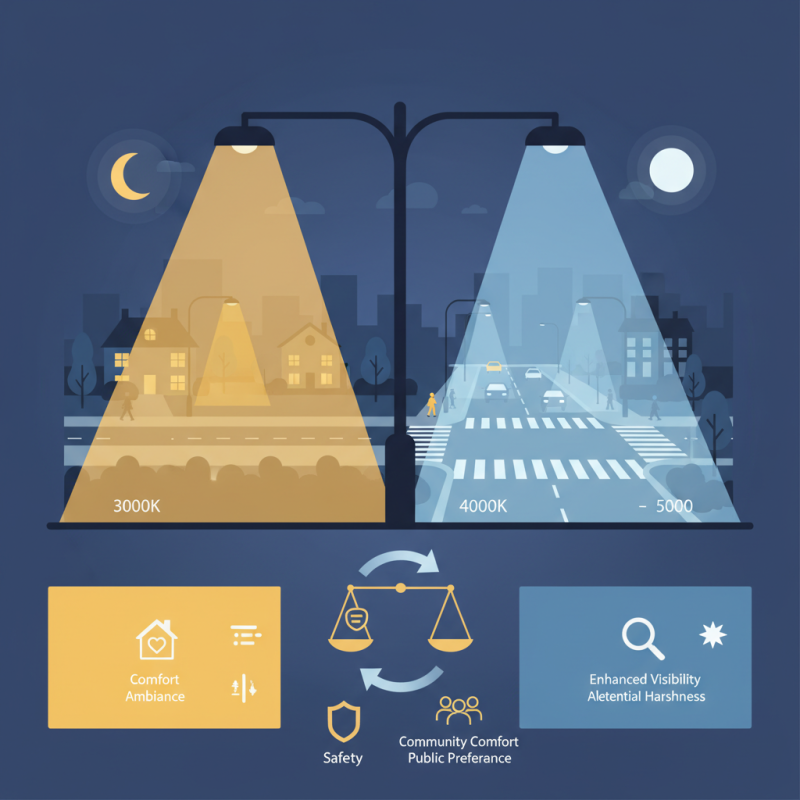
Color temperature is a crucial aspect of LED street lights. It is measured in Kelvins (K) and can significantly affect visibility. Typically, color temperatures range from warm yellow hues of around 2700K to the cool, bluish tones over 5000K. Warm colors create a cozy ambiance, while cooler colors are often perceived as more modern and alerting.
For street lighting, a color temperature of around 4000K to 5000K is commonly chosen. This range offers a balance between visibility and comfort. The bright white light enhances safety on the roads. However, too much blue light can create an uncomfortable glare, leading to eye strain, particularly for pedestrians. Some experts argue that finding the right balance is essential for community satisfaction.
Measuring color temperature involves using a spectrometer. This tool assesses the light spectrum emitted by LED fixtures. Knowing the precise color temperature helps planners choose suitable lighting for different environments. While warmer tones can be inviting, they may not provide the same visibility in critical areas as cooler tones. Striking this balance requires careful consideration and testing.
| Color Temperature (K) | Light Appearance | Best Use Cases | Advantages |
|---|---|---|---|
| 2700K - 3000K | Warm White | Residential Areas, Parks | Creates a cozy atmosphere, less glare |
| 3000K - 4000K | Neutral White | Commercial Areas, Urban Streets | Good visibility, balanced aesthetics |
| 4000K - 5000K | Cool White | Roads, Parking Lots | Enhances visibility, improves safety |
| 5000K - 6500K | Daylight White | Highways, Industrial Areas | Maximizes clarity and alertness |
: Color temperature refers to the hue of light measured in Kelvins (K). It affects visibility significantly.
It plays a crucial role in visibility. Warmer tones create a cozy feel but may reduce clarity.
A range of 4000K to 5000K is commonly chosen. It balances visibility and comfort, enhancing safety.
A spectrometer is used to assess the light spectrum emitted by LED fixtures accurately.
Too much blue light can cause glare, leading to eye strain. Finding a balance enhances community satisfaction.
Yes, cities are increasingly exploring warmer tones for aesthetics and safety, aiming to enhance community interaction.
Local governments often conduct surveys to understand community preferences for color temperature settings.
Yes, different areas may prefer different color temperatures. Industrial zones may prefer brighter options for safety.
Compromises are necessary, and ongoing dialogue with the community is crucial for effective urban planning.
Cooler lighting enhances object recognition and depth perception, important for both pedestrians and drivers.
The article "Best Color Temperature for LED Street Lights: What You Need to Know" delves into the concept of color temperature, discussing how it is measured and its significance in the context of LED street lighting. Understanding color temperature is crucial as it influences the overall ambiance and functionality of urban spaces. The article highlights optimal color temperatures for various urban environments, suggesting that cooler tones may enhance visibility in commercial areas while warmer tones are more suitable for residential neighborhoods.
Moreover, it examines the impact of color temperature on safety and visibility, stressing its role in reducing accidents and enhancing the perception of security among pedestrians and motorists. As cities evolve, the piece also looks ahead to future trends in LED street light color temperature settings, emphasizing the need for adaptive lighting solutions. Ultimately, the article seeks to answer the question, "What is the best color temperature for LED street lights?" by guiding readers through the considerations necessary for selecting the right lighting to suit diverse urban needs.

 Penelope Light